
Off With Their Heads: Why Turmoil Means Change
As France, Spain and Italy burn with youth revolt and housing rage, an essay reads October 2026 through the astrological transit of Pluto in Aquarius, Prigogine's dissipative structures and the science of strange attractors — and asks whether the next twenty years must repeat the guillotine.
The weekend the police lost control
On Monday, 19 October 2026, the French interior minister said something ministers almost never say. Laurent Nuñez admitted that the police had ‘lost control’ in several cities over the weekend, cited a ‘lack of anticipation’, and offered his resignation. Emmanuel Macron refused it, invoking ‘the need for a continuous command of the police’. By Monday night, Place de la République and the streets around Les Halles were under curfew.
The numbers are worth sitting with. On Saturday, the Interior Ministry counted around 550,000 people on the streets of France; one union put the figure above 800,000. More than 2,000 people were arrested, hundreds of police officers and firefighters were injured, Lyon's tourism office was set alight and the historic town hall of Limoges was damaged by fire. All of this began, in September, with secondary school pupils in Seine-Saint-Denis blockading their schools over overcrowded classrooms and missing teachers. By 6 October, more than 250,000 students, teachers, parents and workers had found common cause. A school protest had become something else.
One day later, on the other side of the Alps, the luxury houses of Via Montenapoleone in Milan — Chanel, Tiffany, Dior — emptied their windows and closed early, after two nights in which several hundred hooded protesters, many believed to be minors, looted shops and set bins on fire following a demonstration over poor public services and rising costs. Police detained 271 young people in a single day. Deputy Prime Minister Matteo Salvini announced the government’s answer in a sentence that could have been written in 1789: ‘From words to action: 500 more troops to defend Milan.’ Bologna, Turin, Brescia and Bergamo saw clashes too. That same Saturday, people marched in Lisbon, Porto and Coimbra over pensions and public services, and an antifascist march in Brussels turned violent — a continental weather system rather than a national storm.
And in Spain, the face of the crisis is an 87-year-old woman. Maricarmen Abascal (1938–2026) was evicted from her Madrid home on 23 September and carried out on a stretcher. She was hospitalized with severe anxiety and exhaustion, reached a deal to return home, and died on 7 October before she could. ‘They killed her through heartbreak,’ one mourner told reporters outside her building, among the flowers, candles and children’s drawings. Parliament had already failed to pass emergency housing measures; Pedro Sánchez called a snap general election for 29 November; and, as The Conversation put it, a disabled, evicted pensioner became a political football. The conservative People’s Party, holding absolute majorities in Madrid’s regional and city assemblies, refused even a minute of silence.
I want to propose an ambitious reading of these scenes, one that holds together three vocabularies that are rarely allowed in the same room: the history of the last revolutionary age, the physics of systems far from equilibrium, and the spiritual sciences — astrology among them — that I have practiced and studied for most of my life. My claim is simple to state and harder to live with. Turmoil is not the opposite of order. It is the condition under which a new order becomes possible. But nothing in the physics, the history or the stars guarantees that the order which emerges will be a just one. That depends on what — and who — organises the chaos. Scientists have a name for that organising force. They call it an “attractor”.
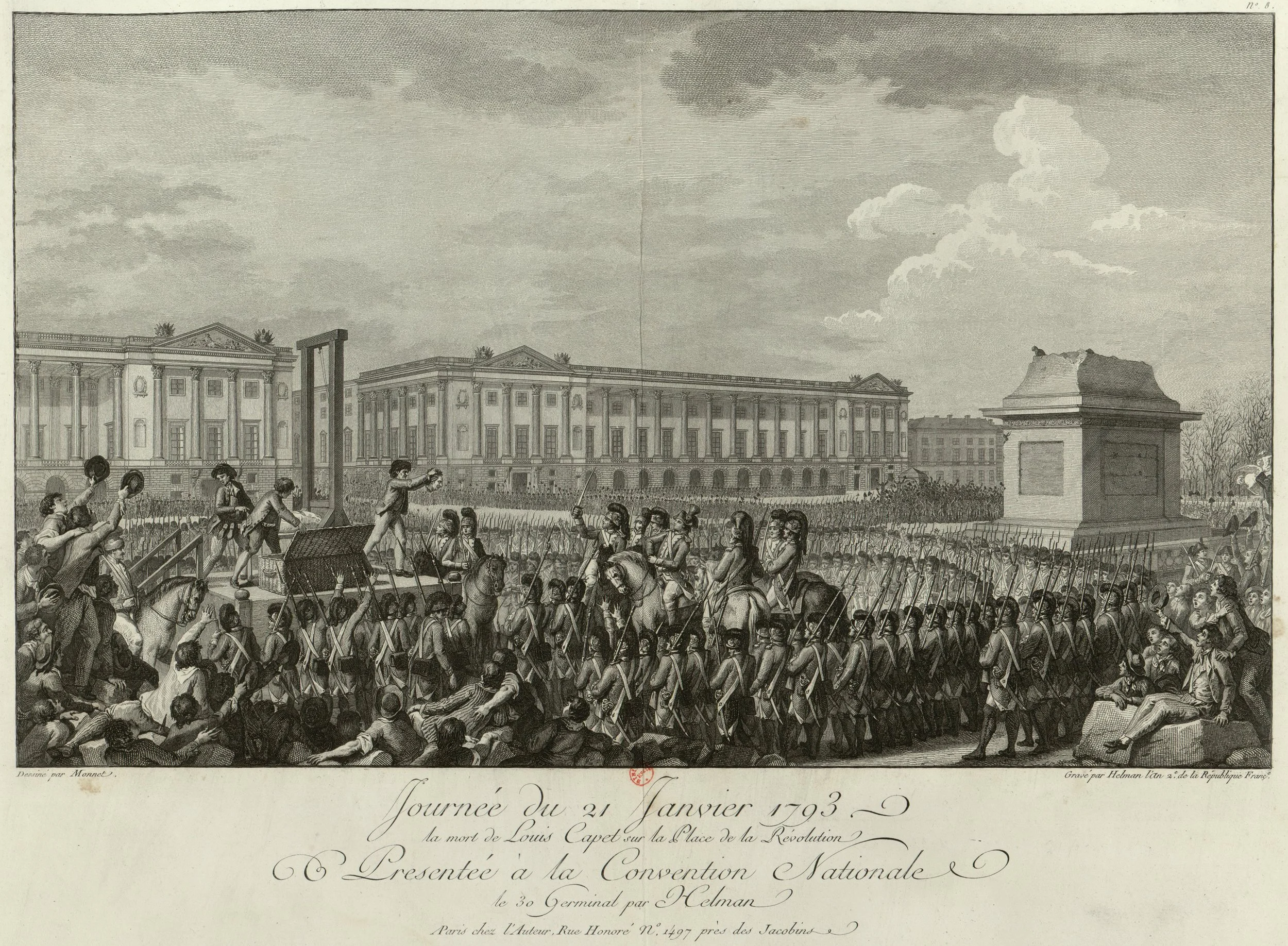
Image Description: An engraving depicting the execution of Louis XVI on 21 January 1793 at the Place de la Révolution in Paris, during the French Revolution. Revolutionary troops carrying rifles and bayonets surround the guillotine, while crowds gather before the monumental buildings of the square. The inscription identifies the scene as the death of Louis Capet, the king’s name after the abolition of the monarchy.
Credit: Isidore Stanislas Helman (after Charles Monnet) / Bibliothèque nationale de France (Gallica)
The last time Pluto crossed Aquarius
Pluto takes roughly 248 years to travel around the zodiac. It first dipped into Aquarius in 2023, settled there on 19 November 2024, and will stay until 2044. The last time it walked through this sign was between 1777 and 1798. Anyone who learned history at school will recognize those dates: they frame, almost exactly, the age of revolutions.
In an episode of The Astrology Podcast, Chris Brennan and the historian-astrologer Nick Dagan Best walk through every Pluto in Aquarius period back to the seventh century BCE, and the last one reads like a syllabus of modernity. William Herschel discovered Uranus in 1781, the first time our solar system grew beyond what the naked eye could see. The thirteen colonies won their war and then, during the transit, wrote the constitution that replaced a king with checks, balances and term limits. France, which had funded that war with money it did not have, entered the transit as a creditor of someone else’s revolution and left it having guillotined its own king. As Best puts it, if France had not been as broke as it was, ‘maybe the Revolution wouldn’t have been as severe’. A fiscal crisis, a monarch who would not tax the privileged, a people told to carry the debt: the parallels with Paris in 2026 are not subtle.
The Brazilian astrologer Aline Macar, in her video on Pluto stationing direct on 15 October 2026, goes further. To her, liberté, égalité, fraternité are not only the motto of the French Revolution but ‘the echoes of Pluto in Aquarius from the last time it was in Aquarius’. Aquarius, in the astrological imagination, is the sign of the collective, of ideology, science and the tribe; Pluto is death, rebirth and the power that lies underground. Richard Tarnas, quoted on the podcast, describes Pluto as the force that ‘impels, burns, consumes, transfigures, resurrects’. Put Pluto in Aquarius, and you get the masses discovering their own power — and power discovering how to fear the masses.
The podcast’s hosts land on a striking symbol for the period: the guillotine itself. On 10 October 1789, the physician Joseph-Ignace Guillotin (1738–1814) proposed to the National Assembly that capital punishment should always take the form of decapitation by a simple mechanism. He meant it as a humanitarian reform — quick, equal, the same death for noble and commoner. Louis XVI, Best notes with some irony, is said to have suggested improvements to the blade. A technology designed to make killing more rational and more egalitarian became the emblem of a Terror that would consume tens of thousands, including many of the revolutionaries who had built it.
The guillotine was not even-handed in what it silenced. Olympe de Gouges, who in 1791 answered the Declaration of the Rights of Man with her Declaration of the Rights of Woman and of the Female Citizen, wrote that if woman ‘has the right to mount the scaffold, she must equally have the right to mount the rostrum’. She was granted the first right on 3 November 1793. Mary Wollstonecraft published A Vindication of the Rights of Woman in 1792, in the same transit. And the most radical revolution of the age began not in Paris but in Saint-Domingue, in August 1791, after the Vodou ceremony at Bois Caïman — a ritual that history books still struggle to name as what it was: a spiritual technology of collective organization. The enslaved people of what would become Haiti did not ask a metropolitan parliament for their freedom. They took it, and in 1804 founded the first free Black republic in the Americas.
The transit closed in 1798 with Napoleon sailing for Egypt. The revolution had gone global, and it had also found its emperor. Brennan and Best end their discussion of the period with a contrast I keep returning to. George Washington, who could have ruled indefinitely, stepped down after two terms. Napoleon, on his deathbed, is said to have mused that the French had only wanted him to be their Washington. Two leaders, two outcomes, from the same revolutionary chaos. Hold on to that pair; they will come back as a matter of physics.
A system that cannot cure itself
If the astrologers supply the archetype, the economists supply the mechanism. The British political economist Richard Murphy asked in a recent video whether France is signalling the end of neoliberalism, and his diagnosis is blunt. Macron’s promise was that markets would deliver growth, prosperity and freedom. Instead came tax reform, labor liberalization, pension reform and constrained public spending — and still weak growth, rising unemployment and stubborn deficits. Now bond markets and fiscal rules demand another round of restraint, paid for in schools, hospitals, pensions and wages. ‘Neoliberalism cannot cure its own failure with yet more neoliberalism,’ Murphy says. ‘That is the problem that we’re facing, and this is what people are realizing.’
The pupils of Seine-Saint-Denis are not reading Murphy. They do not need to. They can count the missing teachers. The pensioner in Madrid did not need a theory of financialized housing to understand what it means to be carried out of her home on a stretcher, in a country where, according to a state survey cited by Al Jazeera, 76.3% of people support market intervention to guarantee access to housing and 79% believe the right to a home should come before its value as a commodity. A political order can lose its legitimacy long before it loses an election. Murphy reaches for May 1968 to make the point: de Gaulle survived the riots and won the vote that followed, ‘but French society was permanently changed’. Or, in the sentence of his I find most useful: ‘Political orders can end even when governments survive.’
What makes the present so dangerous is that the exhausted center is not the only one bidding to replace itself. Murphy notes that Marine Le Pen, positioning herself for the presidential election, proposes cuts that would be hard to tell apart from the austerity the markets already demand — dressed this time in the language of blaming immigrants, Brussels and public sector workers. In Italy, the answer to children looting a Decathlon is 500 soldiers, talk of extended preventive detention for minors, and the foreign minister promising to ‘respond firmly to these attacks on the state’. ‘Coercion,’ Murphy warns, ‘cannot provide a lasting substitute for economic legitimacy.’ The question is not whether the old order is ending. It is what will take its place.
Bri Luna, writing on The Hoodwitch more than a year before these riots, put the astrological version with an economy of language I admire: ‘You don't get the breakthrough without the breakdown.’ And, sharper still: ‘Pluto in Aquarius doesn’t just reveal corruption, it reveals who benefits from obedience.’ Macar, for her part, insists that Pluto’s work in Aquarius is not only political. It runs through algorithms and post-truth, through bubbles in which ‘everyone believes what they want’, through the very machinery that sorts the tribe into tribes. The breakdown, in other words, is happening in our institutions and in our attention at the same time.
This is where I want to leave astrology and economics side by side for a moment and turn to a third language — one that, unlike the first, carries a Nobel Prize, and unlike the second, does not pretend that systems tend towards equilibrium.
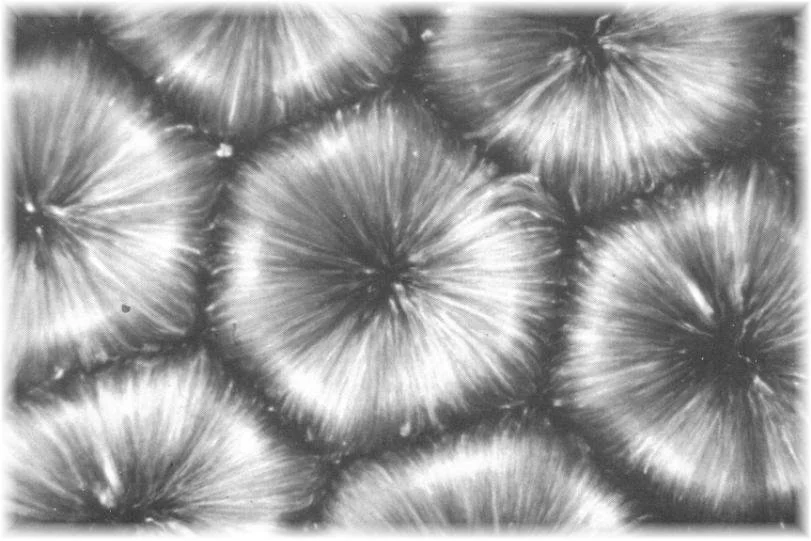
Image Description: Rayleigh–Bénard convection cells: hexagonal patterns that can emerge in a fluid heated from below and cooled from above, as warmer, less dense fluid rises and cooler, denser fluid sinks. These convection currents organize into geometric structures, illustrating how simple physical instabilities can generate complex, self-organizing patterns.
Credit: Physical Sciences Laboratory. Images used with permission of The Parabolic Press. Van Dyke, M., 1982: An Album of Fluid Motion.
Order out of chaos
In 1977 — two hundred years, as it happens, after Pluto had last entered Aquarius in 1777 — the Belgian chemist Ilya Prigogine (1917–2003) received the Nobel Prize for his work on what he called “dissipative structures”. The idea overturned a quiet assumption of classical physics: that systems left to themselves drift towards equilibrium, disorder and stillness, and that order is the exception which must be imposed from outside.
Prigogine showed that this is only true of closed systems. Open systems — those that constantly exchange energy, matter and information with their environment — behave differently. Push them far enough from equilibrium and they do not simply fall apart. At certain critical thresholds, which he called bifurcation points, they reorganize themselves into new and more complex forms. Heat a thin layer of oil gently from below and nothing visible happens; heat it past a threshold and the liquid suddenly arranges itself into a honeycomb of rotating hexagonal cells. The order is not imposed. It emerges, and it is sustained only by the continued flow of energy through it. Living beings, cities, ecosystems and societies are all, in this sense, dissipative structures. Prigogine and Isabelle Stengers called their popular account of this work Order Out of Chaos (1984).
Two features of that theory matter enormously for reading October 2026. The first is that instability is not a malfunction. A system that can no longer absorb the pressures moving through it — a pension system squeezed by bond yields, a housing market that turns homes into assets, a school system without teachers — is a system approaching a bifurcation point. The fluctuations that would have been dampened in calmer times start to amplify. A blockade becomes a movement; an eviction becomes a national symbol; a demonstration becomes a riot. The theory predicts this. It does not regard it as noise.
The second feature is the uncomfortable one. At a bifurcation point, the system does not know which way it will go. Several futures are physically possible, and which one is realized can depend on tiny fluctuations at the critical moment. In The End of Certainty (1997), Prigogine argued that this is precisely where time becomes irreversible and history becomes real: the future is not contained in the present waiting to be unrolled. It is made at the fork. Chaos is the doorway to a new order, but the doorway does not tell you what room you will enter.
I did not come to this theory through physics. I came to it through the body, and it has lived with me since 2013 — first in a dance undergraduate program in São Paulo, then in a thesis in Berlin. In my undergraduate research at PUC-São Paulo, supervised by Gaby Imparato, I worked with dancers in states of deliberate instability — pelvic contractions drawn from the Martha Graham technique that pushed bodies into what we described, with due poetic licence, as high entropy. What biology calls allostatic overload, I wrote then, complexity theory calls a dissipative structure, and Tantra calls a ‘tantric shock’. I quoted the philosopher P. R. Sarkar: ‘diversity is a law of nature’, and ‘where there is no struggle, there is no spiritual practice’. And I wrote a sentence I would sign again today: a body accustomed to a single state, closed to disturbance, is left with death — or with low complexity. The same is true of a society. A polity that cannot tolerate disturbance is not stable; it is dying.
Eight years later, in my master’s thesis at the Humboldt-Universität, At the Crossroads of Knowledge, Prigogine came back with me. I wrote there that my ideas were closer to his ‘physics of non-equilibrium processes, which laid out the foundations for a new science of the irreversibility of time’ than to the binary certainties cemented by patriarchal thought, and I read his end of certainties alongside occulture and the Dionysian — the chthonic force that rationalized modernity tried, and failed, to repress. Writing this essay, I see a connection I did not make then. In the Afro-Brazilian cosmologies I practice and study, the crossroads is where Exu and Pombagira stand: the liminal place where nothing is decided yet and every road is still open. A crossroads, I now think, is a bifurcation point with a trickster living at it.
So far, the physics sounds hopeful: turmoil means change. But the honest version of the theory carries a warning. It tells us that a new order will emerge from the breakdown. It does not tell us which. For that, we need one more concept.
Strange attractors
In 1963 the meteorologist Edward Lorenz (1917–2008), trying to model the weather with three simple equations, found that his system never settled and never repeated, yet never flew apart either. Plotted in space, its trajectory drew two looping wings around which it orbited forever: the first strange attractor. Nine years later, Lorenz gave a talk with a title that would become a cliché of popular science: ‘Predictability: Does the Flap of a Butterfly’s Wings in Brazil Set Off a Tornado in Texas?’.
An attractor, in the language of dynamical systems, is the region of possibility towards which a system tends to move — the shape its chaos keeps returning to. There are different kinds. A point attractor is a single fixed state: a pendulum winding down until it hangs motionless. A strange attractor is something else entirely. It gives the system a coherent pattern without freezing it; it organizes movement without abolishing freedom; it holds an infinite number of non-repeating paths within a recognizable form. In my PUC-SP research, I proposed that a mantra — baba nam kevalam, sung by dancers after exhausting contractions — could work as such an attractor: a vibrating center around which a body in crisis could reorganize itself, not back to where it started, but into a new and more complex stability. Tantric cosmology already pictured the subtle body as a toroidal field orbiting its centers, a figure that looks uncannily like Lorenz’s wings.
Now transpose that to the streets of Paris, Milan and Madrid. When a society reaches a bifurcation point, the question that decides its future is: what are the attractors available at the fork? The options on offer in Europe right now are not equal.
The authoritarian answer is a point attractor. Five hundred soldiers in Milan, curfews in Paris, preventive detention for minors, a promise to ‘respond firmly to attacks on the state’: these are attempts to drag a far-from-equilibrium system back to a single fixed state by force. Physics is clear about what happens to open systems that are artificially closed. They lose complexity. They stop exchanging with their environment. They approach what thermodynamics calls equilibrium and what the rest of us call death. A society governed as a point attractor may look orderly. It is not alive.
The neoliberal answer is, in a sense, the refusal of any attractor at all — the claim that the market will self-organize if only we get out of the way. But the market under financialization is not a strange attractor that holds a society together; it is a flow that pulls value out of homes, schools and pensions and leaves the pieces to the fluctuations. Maricarmen Abascal was not an accident of the system. She was what the system does when nothing organizes it towards human need.
Which leaves the third possibility: attractors that organize without freezing, that give shape to collective energy without seizing it. This is where social justice stops being a slogan and becomes, quite literally, a structural requirement. A just institution — a tenants’ union, a school that is properly funded, a public housing program, a constitution with term limits, a movement in which students, teachers, parents and workers find common cause — works as a strange attractor. It does not tell every person where to stand. It gives the chaos a form it can live inside.
And leaders, too, can be attractors, for better or worse. Here is Washington and Napoleon again. Both emerged from the same revolutionary turbulence. One became a point attractor — the emperor around whom an entire continent was forced to orbit until it broke. The other, whatever else we may say about a slave-owning president, chose to become something more like a strange attractor: a center of gravity that organized a new system and then deliberately let it move on without him. The difference was not in the chaos. It was in the attractor. The leaders our moment needs are not saviors who promise to end the turbulence, but organizers who know how to give it a just shape and then step aside.
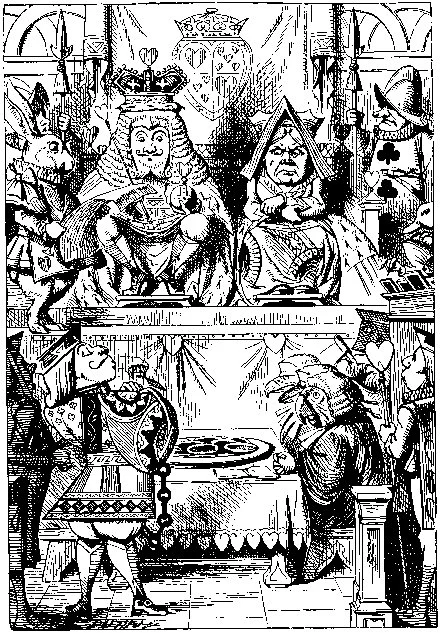
Image Description: This is Sir John Tenniel’s 1865 black-and-white illustration of the King and Queen of Hearts seated on their thrones, surrounded by courtiers, from Lewis Carroll’s Alice’s Adventures in Wonderland. The elaborate linework, heraldic emblems, and exaggerated expressions evoke the absurdity and authoritarian pomp of Wonderland’s royal court.
Credit: Sir John Tenniel / British Library, public domain
Off with their heads?
So: will the next twenty years of Pluto in Aquarius need the guillotine again?
I do not want to answer that question too comfortably. It is easy to praise non-violence from a rent-controlled flat in Berlin. Many of the freedoms Europe now takes for granted were not granted; they were taken, sometimes in blood. The people of Saint-Domingue did not abolish slavery by persuading their owners in a seminar. To tell the evicted, the underpaid and the unschooled that their rage is illegitimate while the violence done to them — the eviction, the austerity budget, the closed hospital ward — passes as administration is its own kind of brutality. Pluto, every astrologer will tell you, does not negotiate. Something has to die.
But the history of the last transit also tells us what the guillotine actually produced. The Terror devoured its own. Olympe de Gouges went to the scaffold in November 1793; Danton followed in April 1794; Robespierre in July. The blade that was meant to make the revolution irreversible made it exhausted, and an exhausted society is a society waiting for a point attractor. Within five years France had its consul, and within ten its emperor. In the terms of this essay, terror is a way of collapsing a rich, turbulent system into its simplest possible state. It does not organize the chaos. It ends it — and with it, the very complexity from which a freer order could have grown.
There is also Guillotin’s lesson, which may be the most Aquarian of all. The machine was invented as an act of rational humanitarianism: the same, efficient death for everyone. Pluto in Aquarius is the transit of technology, and Macar and Luna both point to algorithms, data and artificial intelligence as its terrain. I suspect the guillotine of our age, if there is one, will not be a blade in a public square. It will look like a spreadsheet: an automated eviction notice, a credit score, a budget line that removes a teacher from a classroom, a content filter that decides which grief is visible. The heads that roll will not be those of kings. They never were, for long.
Audre Lorde warned us, in a sentence I have quoted in almost everything I have written, that ‘the master’s tools will never dismantle the master’s house’. The guillotine was always the master’s tool — the state’s monopoly on death, borrowed for a season by the people and then returned with interest. If we want something other than a repetition, we need other tools. My own work has been an attempt to name some of them. I have written about the erotic, in Lorde’s sense, as a form of knowledge and power that repressive regimes fear precisely because they cannot administer it — and about Genoa’s mayor, Silvia Salis, answering Meloni-era restrictions on unauthorized gatherings by throwing a vast free techno concert in the street. I have written about the crossroads, where Pombagira and Exu stand, as the place where what was demonised by patriarchal modernity returns as a way of knowing. And I have spent years, in rehearsal rooms and in ritual, watching how song, breath and shared rhythm reorganize bodies that had been pushed to their limits. Bois Caïman was not only a conspiracy; it was a ceremony. The first act of the Haitian Revolution was an attractor.
None of this replaces the hard, unglamorous work of organizing: the tenants’ unions in Spain, the alliance of pupils, teachers and parents in France, the rent laws, the public housing, the electoral campaigns, the leaders who know how to build institutions and then let go of them. On the contrary — these are the strange attractors I am talking about. What the spiritual sciences add is the reminder that people do not organize around spreadsheets alone. They organize around meaning, beauty, grief and joy. A movement that cannot sing will eventually reach for the blade.
Pluto in Aquarius will not ask us whether we want change. That question has already been answered in the streets of Paris, Milan and Madrid. It will ask us what we are willing to organize around while the old order comes apart. The chaos is not optional. The attractor is.
In Alice’s Adventures in Wonderland, the Queen of Hearts spends the entire book shouting ‘Off with their heads!’ at gardeners, croquet players and anyone who displeases her. It is the Gryphon who lets Alice in on the secret: ‘It’s all her fancy, that: they never executes nobody, you know.’ The cry is theater — the performance of a power that is already hollow.
Perhaps that is the reading this transit invites. Off with their heads, yes — but let it be the head of the pyramid that comes off, and not the head of any person. Let the crown fall and spare the neck. Let authority stop flowing from a single point at the top and start moving the way air moves, the way Aquarius moves: sideways, between us, through the collective, in the open. Two hundred and fifty years ago, the age of revolutions taught Europe that a king could be made mortal. This time, we might learn that power itself can be made plural — and that a new order can be sung into being as well as cut.
Sources and further reading:
The Guardian, on Laurent Nuñez's admission, 19 October 2026: theguardian.com
The Guardian, on Milan's shop closures and troop deployment, 20 October 2026: theguardian.com
Time, 'How the Protests in France Spiraled as Police "Lost Control"', 19 October 2026: time.com
Al Jazeera, on French curfews, 19 October 2026: aljazeera.com
Al Jazeera, on the death of Maricarmen Abascal, 9 October 2026: aljazeera.com
Reuters via ThePrint, on Milan, 19 October 2026: theprint.in
BBC News: bbc.com
The Conversation, on Maricarmen Abascal and Spain's election: theconversation.com
Richard J. Murphy, 'Is France signalling the end of neoliberalism?': youtu.be/CpRl1ajsj-k
Aline Macar, 'Pluto Direct: End of Pluto's retrograde in Aquarius!': youtu.be/XFaQMiVnuBc
Chris Brennan and Nick Dagan Best, 'Pluto in Aquarius in History', The Astrology Podcast, January 2024: youtu.be/YZMJ6RGpEfs
Bri Luna, 'Pluto in Aquarius: Revolution, Uprising, and the Power of the People', The Hoodwitch, 9 June 2025: thehoodwitch.com
Ilya Prigogine and Isabelle Stengers, Order Out of Chaos (1984)
Ilya Prigogine, The End of Certainty (1996)
Edward N. Lorenz, 'Deterministic Nonperiodic Flow', Journal of the Atmospheric Sciences 20 (1963)
Edward N. Lorenz, The Essence of Chaos (1993)
Richard Tarnas, Cosmos and Psyche (2006)
Olympe de Gouges, Déclaration des droits de la femme et de la citoyenne (1791)
Audre Lorde, Sister Outsider (1984)
Lewis Carroll, Alice's Adventures in Wonderland (1865)
Marcelo Fernandes Cunha, O som da consciência: prática do mantra baba nam kevalam como atrator em processos criativos, PUC-SP (2015)
Marcelo Kuna, At the Crossroads of Knowledge: Undoing the Patriarchy with the Pombagira, Humboldt-Universität zu Berlin (2023): doi.org/10.18452/26245
Photo credit: © Marcelo Kuna/ChatGPT