
Critical Thinking Needs a Self-Assessment
Jason Ānanda Josephson Storm's new book turns critical theory's sharpest knife against critical theory itself — and then asks whether any of us can still bear to hold it.
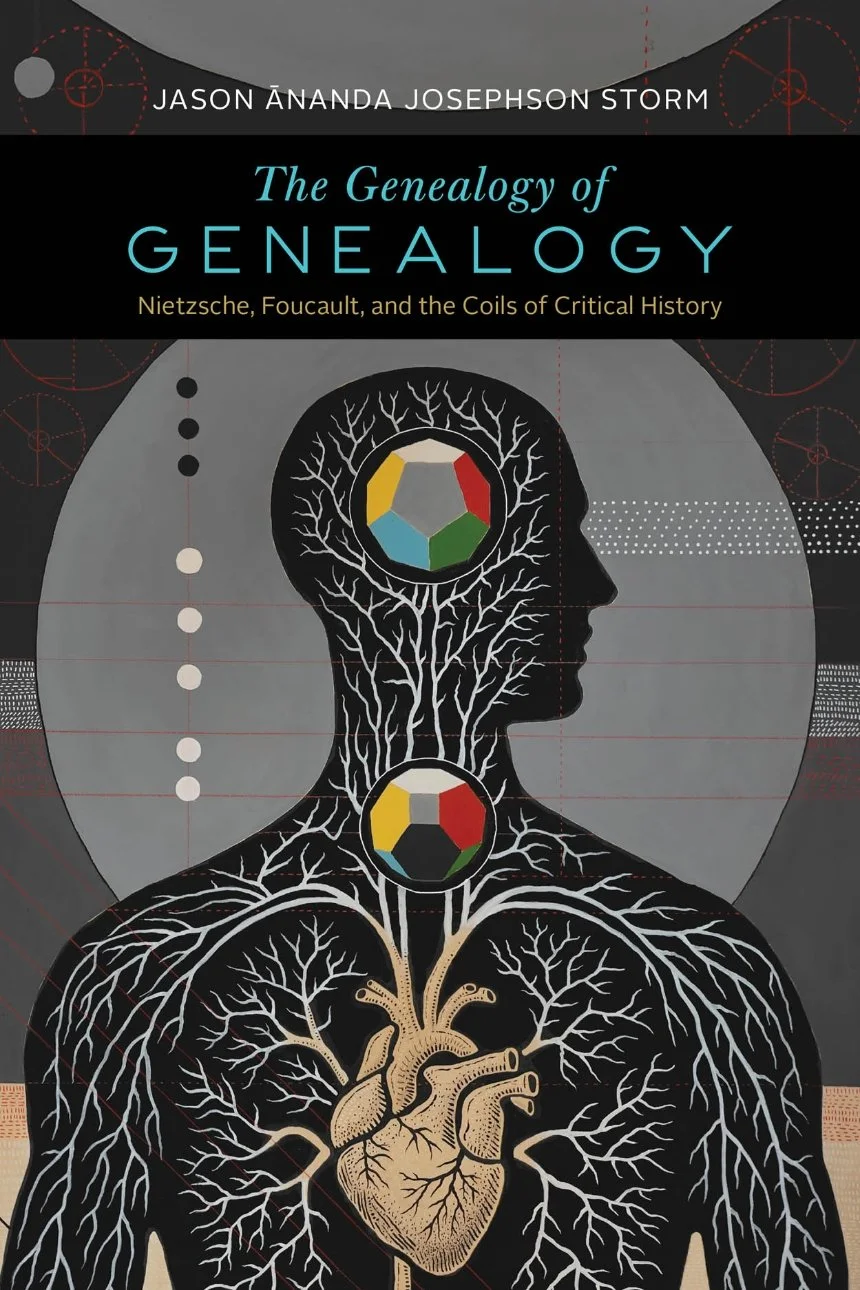
Image Description: a book cover from author Jason Ānanda Josephson Storm depicts the title of his new book, The Genealogy of Genealogy: Nietzsche, Foucault, and the Coils of Critical History, on top of a humanoid figure being represented by a ramification of a vascular system that looks like the branches of a tree, connecting the figure’s heart to a couple of colourful Dodecahedron images placed at the humanoid’s brain and larynx regions. At the center of the picture is a heart that connects all the vascularized ramifications in this figure.
I had been waiting anxiously for my copy of Jason Ānanda Josephson Storm’s latest book, The Genealogy of Genealogy: Nietzsche, Foucault, and the Coils of Critical History — my somewhat late birthday present, after I found out Jason had just published a new monograph. I expected to be provoked. I did not expect to be implicated.
Because that is the trap Storm builds, and he builds it for people exactly like me. Genealogy — the method I reach for whenever I want to show that some "natural" category was assembled in history, served somebody's power, and could have been otherwise — has become the favourite knife of the critical humanities. We use it to dissect everyone else. Storm picks the knife up, turns it around, and slides it, slowly and lovingly, into the hand that has been holding it. He calls the book a genealogy of genealogy, and he means it almost zoologically: it is built to devour itself, an ouroboros, a serpent patiently digesting its own tail. Its end is in its beginning. It is the only critique I have read in years that made its own author flinch — and that asks you to flinch with him.
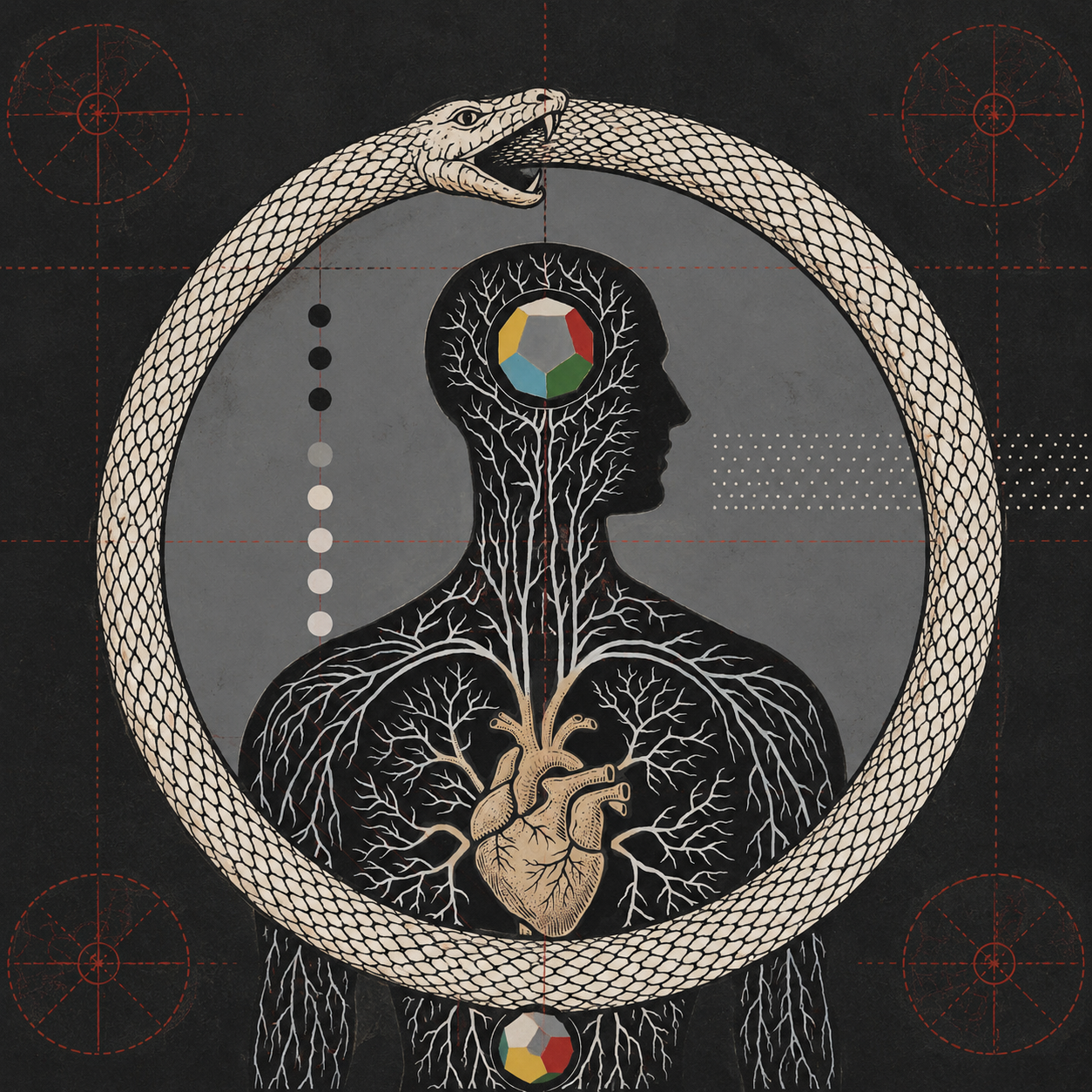
Image Description: The ouroboros is seen here in intertextuality with Jason Storm’s art cover. Its body creates a circular shape around the humanoid and vascularized picture from the book’s cover.
Credit: Jason Storm/ChatGPT
A word about lineage — including this book's own
Before the serpent, a brief detour, because Storm did not arrive here from nowhere. His previous book, Metamodernism: The Future of Theory (2021), is the engine humming under this new one — and its conclusion, fittingly, points "toward a metamodern historiography." So a few words on metamodernism are owed, if only as connective tissue.
Here is the first delicious irony, and it is one Storm would appreciate: metamodernism has no single creator either. The term was first coined in 1975 by the Iranian-American literary scholar Mas'ud Zavarzadeh, in an essay on the eclipse of fiction in American prose — a diagnosis of a reality grown too bizarre for stories to keep up. It surfaced again in 1999 in the work of art historian Moyo Okediji, who used it to think past both modernism and postmodernism inside African and African-American art. It was then revived and redefined for a wide audience by the Dutch cultural theorists Timotheus Vermeulen and Robin van den Akker in their 2010 essay "Notes on Metamodernism," which described a structure of feeling that oscillates between modern sincerity and postmodern irony — neither naïve enthusiasm nor exhausted cynicism, but a restless swing between the two. It has since branched into a developmental, frankly political variant — the "Nordic" metamodernism of Hanzi Freinacht (the pen name of sociologist Daniel Görtz and philosopher Emil Ejner Friis), accessible, funny, and deliberately bratty — and into the literary scholarship gathered by Alison Gibbons and others in Metamodernism: Historicity, Affect, and Depth after Postmodernism (2017).
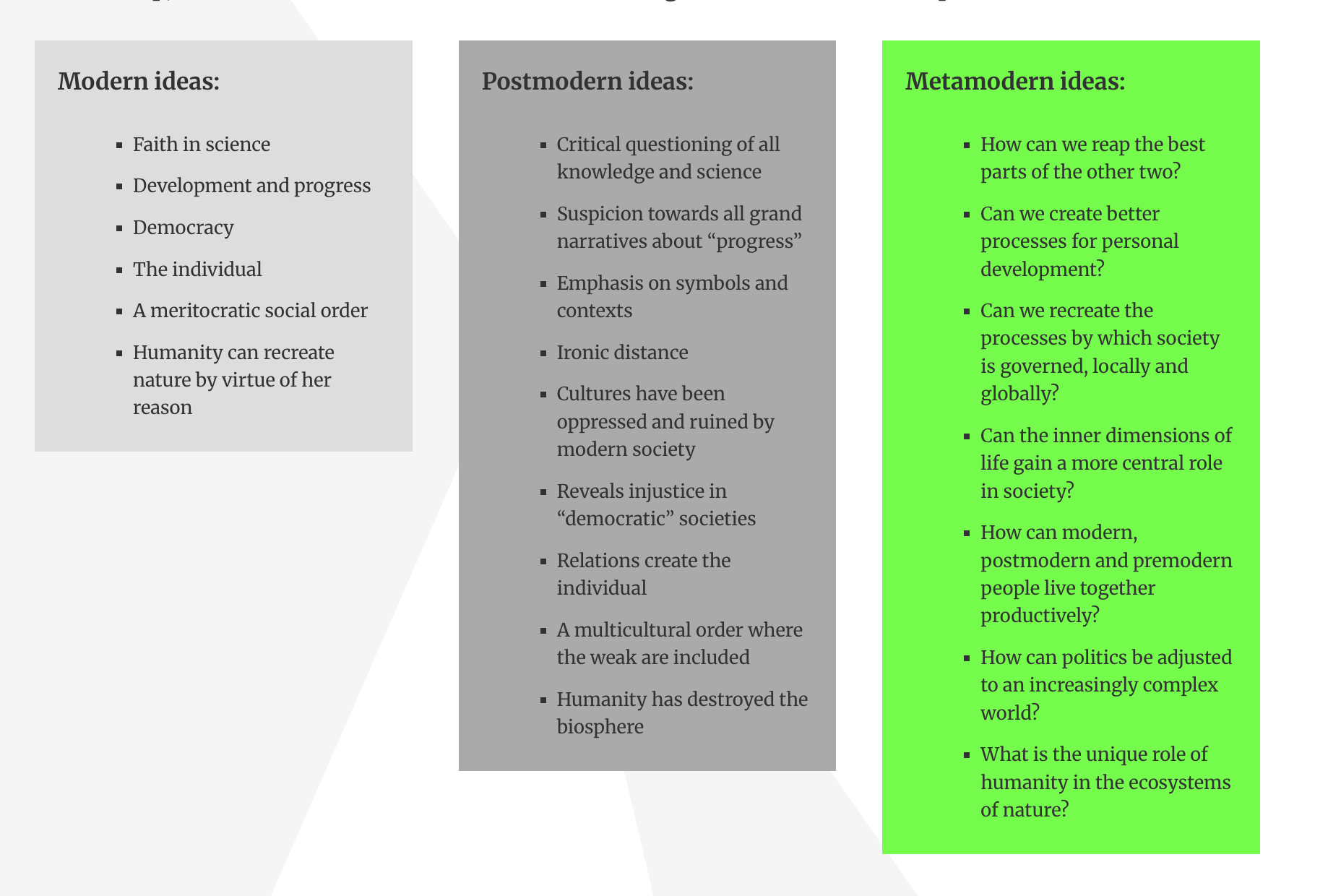
Image Description: A diagram taken from Hanzi Freinacht’s website explains the differences between Modernism, Postmodernism and Metamodernism (source: https://metamoderna.org/metamodernism. Accessed on 10 May 2026)
Notice what just happened. To explain metamodernism I had to trace a messy, multi-authored, retrospectively tidied lineage — a term coined, abandoned, and re-coined across three decades and three continents, claimed by no one and several at once. Which is precisely the kind of origin story this book is about. The doorway into a book on the perils of tracing genealogies turns out to be: tracing a genealogy. The serpent has already begun to bite.
The scandal hiding in an ordinary word
Now the heart of it. Walk up to anyone outside a university and say the word genealogy. They will think of Ancestry.com, of a chart of bloodlines, of a Mormon temple humming with the names of the dead, of antiquarians and family trees. Walk into a seminar room and say the same word, and it means very nearly the opposite: a method for debunking origins, for showing that what looks eternal is contingent, for exposing the power hidden inside our most cherished concepts. Two meanings, one word, pointed in contrary directions.
Storm's first move — and it is the one that should unsettle laypeople and specialists alike — is to refuse to let those two meanings stay politely apart. He shows how the academic genre of genealogy actually took shape, and how the term was, for most of its modern life, soaked in heredity, race, sovereignty, and eugenics. This is not a clever pun. Across the nineteenth and twentieth centuries, "genealogy" was not primarily a tool for exposing power. It was one of biopower's most efficient instruments — the science of pedigree, the chart on the eugenicist's wall, the paperwork of who may breed and who may not. Genealogical reasoning helped underwrite sterilisation programmes, white-supremacist bloodline fantasies, the dispossession of Indigenous peoples, and, at its terminus, the racial bookkeeping of the Holocaust.
And this is the part that should stop a contemporary reader cold: Storm refuses to leave any of it in the past. We live, he argues, inside entangled genealogical regimes that have not faded but metastasised — Ancestry.com and DNA fingerprinting, an era of manufactured genetic certainty and quantised pasts, leaders who bellow that immigrants are "poisoning the blood" of the nation while gilding their resorts with a fabricated pedigree. The blood-and-soil grammar that Europe knows intimately, and that I watch resurfacing in German politics with depressing fluency, is not a museum piece. The eugenicist's family tree has simply gone digital.
And here Storm closes the jaws of his own argument with a beautiful piece of internal sabotage. Critical genealogists themselves insist that a word drags all its meanings behind it — that you cannot cleanly quarantine a "genealogy of desire" from the term's other lives. Very well, Storm says: then every scholar who brands their work "genealogy" is, at least unconsciously, importing the heredity, the pedigree, the eugenic residue. By the genealogists' own theory of language, they are haunted by exactly what they think they are exposing. He warns, with relish, that by the end you "may find it hard to use genealogy without flinching." He is right. I flinched.
Nietzsche did not invent it
Most of us were taught a tidy creation myth: in the beginning was Nietzsche, who wrote On the Genealogy of Morals (1887) and bequeathed us the genealogical method; then came Foucault, the great inheritor, who refined it. It is repeated so often it has the texture of fact.
It is, Storm argues, almost entirely false. Before the 1950s, the idea that Nietzsche possessed a "genealogical method" was almost completely absent — among French commentators, among everyone. On the Genealogy of Morals was read as what it largely was: a polemic. Not a neutral instrument for critical history but a furious defence of aristocratic values against what Nietzsche despised as egalitarian "slave morality." The book the seminar room treats as the birth certificate of subversive method was, in its own century, a deeply anti-egalitarian broadside. Scholars comfortable assuring us that epistemology is "just politics in disguise" may not enjoy discovering that the founding text of their method was politics of a kind they would never sign.
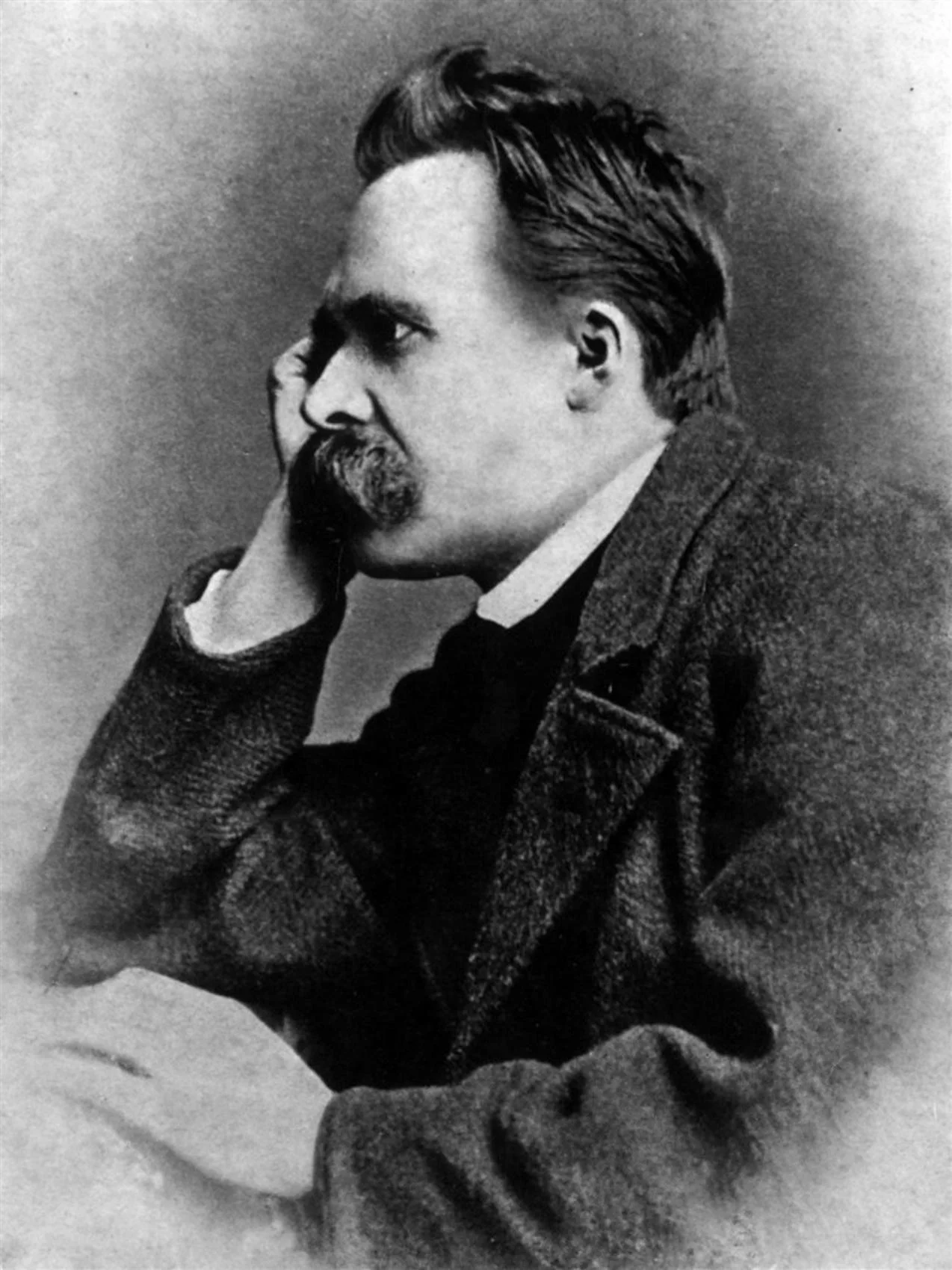
Image Description: Friedrich Nietzsche, c. 1882. A black-and-white photographic portrait shows the philosopher in profile, seated with his head resting on one hand in a contemplative pose. His thick, distinctive moustache, swept-back hair, and serious expression dominate the composition, while his dark jacket blends into the softly lit background, emphasizing his introspective demeanor. The man the seminar room remembers as the first genealogist would not have recognised its own development.
The headless god in the forest
So if Nietzsche did not make himself a genealogist, who did? This is where Storm’s book becomes genuinely strange, and where I — as someone who studies occulture for a living — sat up.
In late 1936, a small band of French philosophers, artists, and mystics formed a secret society. Behind closed doors they called it Acéphale — "the Headless." They performed clandestine rites, slipped off to forest groves in pursuit of what they called the chthonic core of myth, and planned — this is not a metaphor — a voluntary human sacrifice, a ritual decapitation meant to recapitulate the death of God and king and detonate a new mythology for a godless age. They found a willing victim. They never found anyone willing to wield the blade, so the sacrifice was never performed. The society's public face was the Collège de Sociologie; its leader was Georges Bataille; and it was this quasi-surrealist coven that, having symbolically dismembered and reassembled Nietzsche, began to manufacture the French Nietzsche we inherited — read through deliberately wayward, almost alchemical strategies. The high secular method of the contemporary humanities has, at its root, a headless god and an aborted blood rite. I could not have invented a better story if I tried.
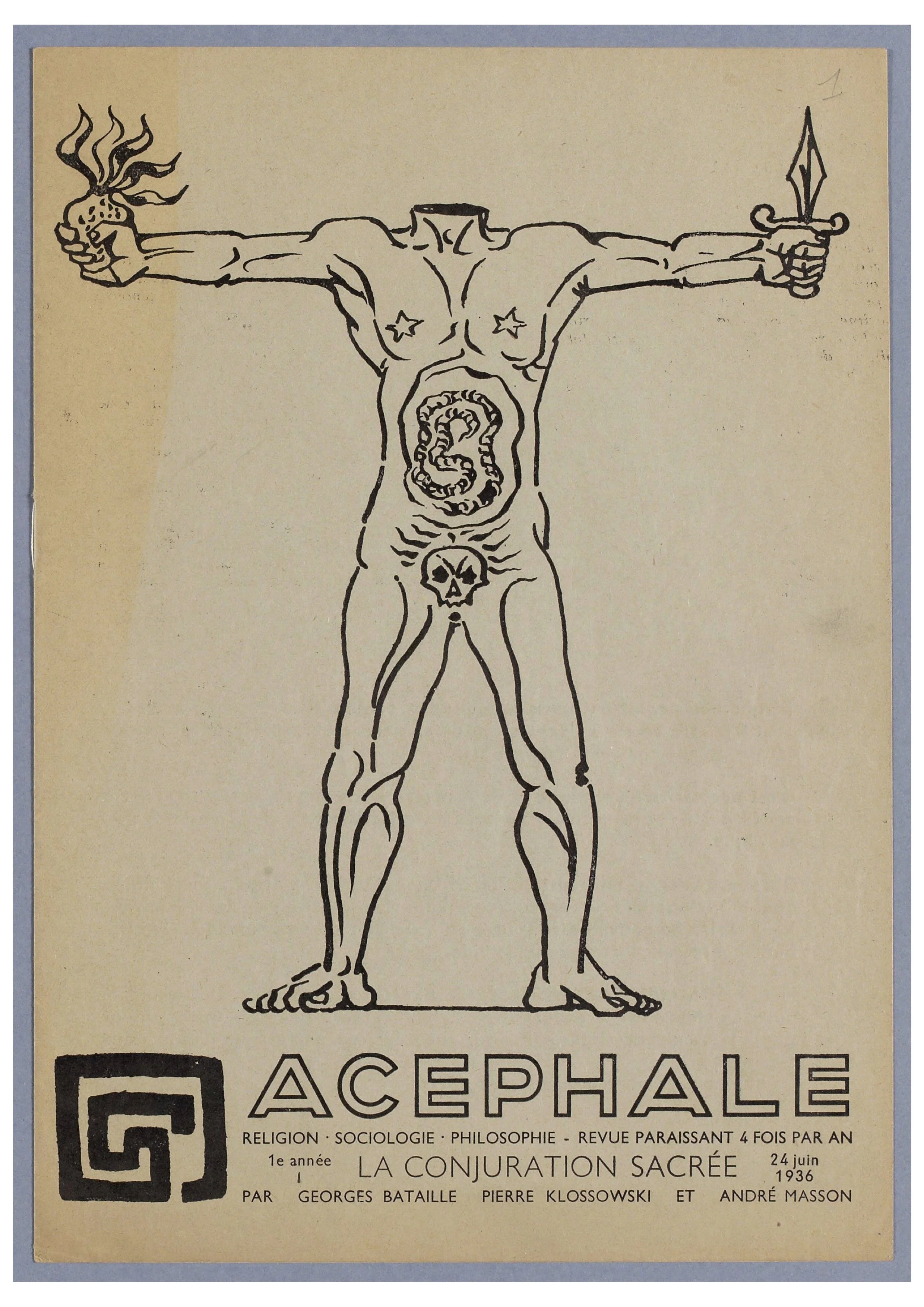
Image Description: André Masson's 1936 drawing of the headless man—the Acéphale emblem (a headless, muscular male figure with a star on his chest, an exposed labyrinth-like pattern in place of his abdomen, and a skull at his pelvis, holding a dagger in one hand and a flaming heart in the other). Originally created as the cover illustration for the first issue of the journal Acéphale, the image is accompanied below by the title, the subtitle "Religion · Sociology · Philosophy," and the phrase La Conjuration Sacrée ("The Sacred Conspiracy"), with the names Georges Bataille, Pierre Klossowski, and André Masson, dated 24 June 1936. It is the single most evocative image in the whole genealogy, and it is genuinely esoteric.
The man in the meat van
If Acéphale supplied the myth, one overlooked figure supplied the method — and his story is the moral centre of the book. In 1941 the French-Jewish philosopher and poet Jean Wahl climbed into the back of a butcher's delivery van and hid among the carcasses, trying to reach the border of the Free Zone. He had just escaped the Drancy internment camp; the Gestapo had orders to shoot him on sight. The crossing collapsed, he ran three miles across open fields, and eventually boarded one of the last refugee ships to America.
Wahl survived, returned, and delivered the Sorbonne's first-ever lecture courses on Nietzsche — and it was Wahl, Storm shows, who actually positioned Nietzsche as a genealogist, who argued the method reached beyond a critique of morality into a whole theory of knowledge. His students included Michel Foucault and Gilles Deleuze; Deleuze began his career working directly under Wahl's supervision. And here the irony turns almost unbearable. Wahl was acutely attuned to the word genealogy because his own genealogy — his Jewish lineage — had been weaponised against him: it was Vichy's racial bookkeeping that "outed" his descent, stripped his citizenship, cost him his post. The man who taught France to hear genealogy as method had watched genealogy-as-bloodline try to erase him. That sentence alone should be enough to retire the tidy Nietzsche-to-Foucault fairy tale forever.
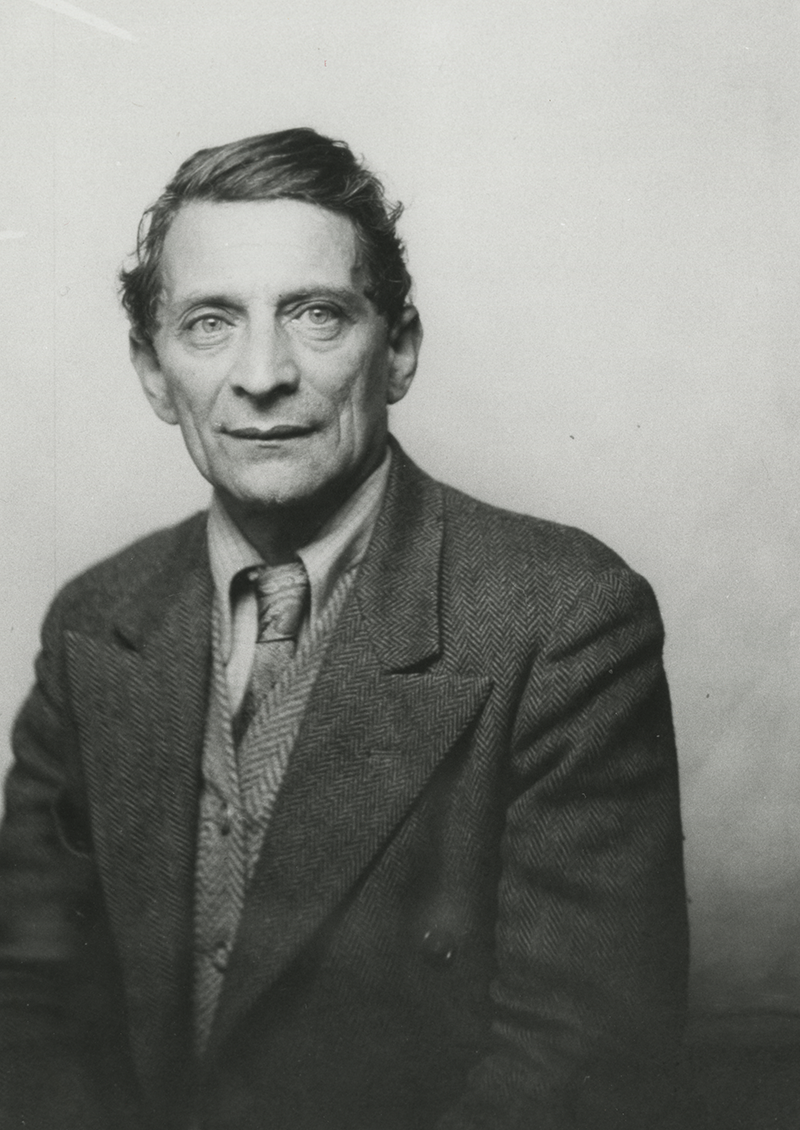
Image Description: A dignified black-and-white photographic portrait of Jean Wahl, shown from the chest up against a plain light background. He faces the camera with a calm, thoughtful expression, his head slightly turned. He has neatly combed dark hair, a slender face with prominent cheekbones, and light-colored eyes. He is dressed formally in a textured tweed jacket over a buttoned waistcoat, collared shirt, and patterned tie. The simple composition and soft lighting give the portrait a reflective, scholarly quality, drawing attention to his face rather than the setting.
© Fonds Jean Wahl/IMEC
The monster Deleuze made
Then there is Deleuze, who never pretended to be gentle with the dead. He once described his way of doing the history of philosophy as a kind of buggery — taking an author from behind and giving him a child that would be his own offspring, "yet monstrous." "Nietzsche the genealogist," Storm argues, was precisely one of those monsters: a fabulous beast born of deliberate, fertile misreading. In Nietzsche et la philosophie (1962), Deleuze installed genealogy as the master key to all of Nietzsche.
But Storm's most uncomfortable discovery is what that key is made of. Read closely, Deleuze's genealogy keeps slipping back toward its more literal, biological meaning — toward heredity. It is shot through with talk of noble and base "genetic lines," of forces, of breeding; at one point Deleuze appends the ominous coda that the strong must be defended against the weak. The eugenical echo is not faint. And it is not abstract: Deleuze personally knew Jean Rostand, a French biologist and outright eugenicist who defended sterilisation and the breeding of "supermen." Storm's verdict is the kind of sentence that detonates a seminar: Deleuze's 1962 work sits historically and socially closer to eugenics than Foucault's efforts a decade later. The Deleuzians who would never admit to an influence have, all this time, been propagating a Nietzsche midwifed beside the eugenicist's bench.
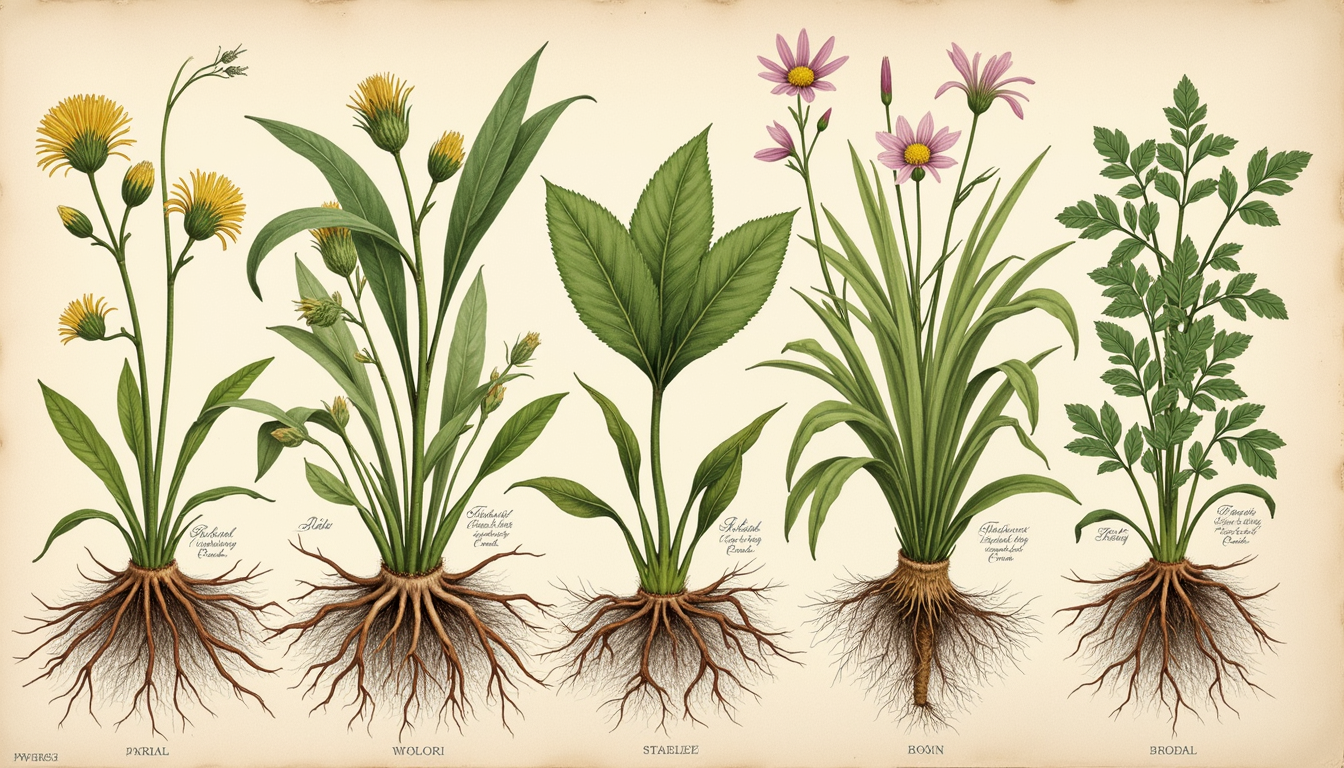
Image Description: A botanical plate of fictional rhizomes, depicting various plants roots. Deleuze and Guattari later abandoned genealogy for the rhizome — "the rhizome is an anti-genealogy“.
Confessions of the unmasker
And so to Foucault — the man who taught a generation to unmask, to expose the disavowed influence and the buried descent. Storm's fifth chapter delivers the most satisfying reversal in the book by simply turning Foucault's own method on Foucault's own life. Because the great unmasker spent his career unmasking himself. He denied, over and over and with increasing vehemence, that he had ever been a structuralist — at Dartmouth, in Kyoto, in the foreword to The Order of Things, in interview after interview. Yet only a few years earlier he had happily called himself structuralism's "altar boy." More than denying it, he edited it out: he quietly stripped the word "structural" from a later edition of The Birth of the Clinic; he suppressed his own Marxist first book and tried to block its translation. He rewrote his past and then mocked anyone who asked him to stay the same. The very practice he made famous — exposing strategic acts of erasure — is the one he performed on his own biography. Storm, with perfect justice, returns the favour.
Foucault's occult father
Here is the revelation I will be thinking about for a long time. Whom was Foucault concealing when he denied his structuralism? Above all, a figure his biographers mention but never quite explain: the historian of religion Georges Dumézil, whom Foucault called, in his letters, "dear father," and to whom he publicly confessed he owed his entire method of analysing discourse.
And Dumézil was an occultist. A Freemason, he wrote a genuinely bizarre late book — Le Moyne noir en gris dedans Varennes, "The Black Monk in Gray Within Varennes" — that reads Nostradamus's prophecies through secret codes, allegorical wordplay, telepathy, spirits, and frank gestures toward occult power. He even attributed his own famous theory of Indo-European society to Nostradamus. Foucault not only knew this book; he taught it, lovingly, in his final lectures, calling it a "secret garden." So the patron saint of secular suspicion, the thinker most responsible for teaching the humanities to distrust hidden powers, learned his craft from a Freemason decoding the prophecies of a Renaissance seer. The occult was not exiled from "critical theory." It was standing, unacknowledged, at the cradle. For those of us who have always insisted that the esoteric and the academic are not the strangers they pretend to be, Storm has handed over the receipts.

Image Description: A historical engraved portrait of Nostradamus, showing a solemn man with a long, full beard, wearing Renaissance clothing and a dark flat cap. He is depicted from the shoulders up inside an ornate oval frame, rendered with the fine lines typical of eighteenth-century engravings. Beneath the portrait is a French inscription identifying him as 'Michel Nostradamus, physician,' stating that he was born in Saint-Rémy, Provence, on 14 December 1503, and died on 2 July 1566. Additional small text at the bottom credits the artists and the Paris publisher of the print. Foucault's 'dear father,' Georges Dumézil, decoded Nostradamus’s prophecies — and Foucault taught Dumézil’s book in his final year.
The anachronism hiding in plain sight
The book's quiet masterstroke is an anachronism most scholars have walked past for fifty years. The famous preface to the second edition of The Structuralist Controversy (1972) — the one everyone cites to anoint Foucault as the inventor of "genealogy" — was written in 1971 and was in fact gesturing not at Foucault's celebrated essay "Nietzsche, Genealogy, History" (which had only just appeared, or had not yet) but at Deleuze and Derrida. The pedigree everyone reads back to Foucault was never his to begin with. Genealogy had no single origin. It erupted, in the 1960s, across an entire stratum of French thought at once — Althusser and Balibar in Reading Capital, Derrida, Sarah Kofman, Michel Serres, Paul Ricœur, even the Annales historians — most often, but by no means only, by way of Nietzsche. The "phantom of origins," Storm calls it: the genealogists, of all people, built themselves a fake birth certificate.
When the unmasker's knife changes hands
So the irony is total, and Storm aims it at the whole critical humanities: the scholars who wield genealogy against everyone else's origin myths turn out to be tender about their own bloodline — their proud, invented descent from Nietzsche and Foucault. The fiercest debunkers keep the most cherished pedigree.
But the charge that should keep us up at night is not about academic vanity. It is about now. The reflex that genealogy drilled into a generation — that all knowledge is power in disguise, that expertise is merely authority in a lab coat, that every consensus is a construction waiting to be dissolved — was never the private property of the left. The right has picked up the same knife. Climate denial, "alternative facts," the organised demolition of expertise: all of it runs on weaponised doubt, on precisely the move that critical theory taught the world to make. Treating every power as nothing but coercion, Storm warns, simply hands the field to whoever is most willing to use it. And there is a quieter casualty. We have grown fluent in apocalypse — our films, our novels, our politics overflow with the end of the world — and illiterate in utopia. Cynicism and grievance can wear an institution down; they cannot build anything in its place. You cannot reconstruct a society out of unmasking alone. (Readers of my own broadsides against the wellness-industrial complex will know I say this to defend no charlatan — but the knife we use to expose them is the same one now being turned against the very idea of knowing anything at all.)
Turning the serpent on its head
Here is where Metamodernism returns as the way out. Genealogy is powerful, Storm grants, precisely because it reveals rupture, discontinuity, contingency, power. But — the metamodern turn — power is everywhere, and variation is the norm. In the real texture of social worlds, flux is the baseline, not the surprise. The genuine anomalies, the things that actually demand explanation, are stability and persistence: whatever somehow holds together across all that churn. A method tuned only to detect rupture is, in a world made of rupture, telling you almost nothing. So Storm flips it. Instead of triumphantly announcing that some category was contingent all along, he asks why it ever held — and goes looking for the anchoring processes, the institutions and material conditions and sheer habits of copying, that keep a fragile thing in place.
And the inversion has teeth that should interest any decolonial reader, because it catches genealogy in its own blind spot. When genealogy insists that some arrangement — Foucault's history of madness, say — was a peculiarly European rupture, it can walk straight past the cross-cultural patterns staring back at it. Set the European story beside East Asia, Storm notes, and the supposed contingency starts to look like convergence: a recurring human answer to a recurring human problem. Genealogy's allergy to universals can curdle into a provincialism of its own. The honest question is never simply is this contingent but to what degree, and why.
What the archive still holds
None of this is an abandonment of critique. It is — and this is the part of the book I will carry with me — its conversion from demolition into recovery. Storm reminds us that Foucault himself gestured, almost in passing, toward another kind of history: the activation of what he called subjugated, insurrectionary, "counter-" knowledges. Take that gesture seriously, not as a footnote but as a method, and genealogy stops being only a tool for undoing and becomes a tool for world-making. Storm points the way through decolonial retrieval — naming thinkers like Kwasi Wiredu, Sophie Oluwole, and Miguel León-Portilla — through an epistemic justice attentive to whose knowledge counts, through an ethics that treats inquiry as care rather than pure suspicion. The archive, he suggests, is crowded with wisdoms we dismissed too quickly — viable theories, forgotten cosmologies, suppressed utopias — and not merely with errors waiting to be exposed. A buried past, he insists, is not only wreckage to be catalogued. Some of it is seed. The past, he says plainly, should not belong to the victors alone.
That, finally, is why my title is what it is. Critical thinking needs a self-assessment. I make my living, on the page and on the stage, doing exactly this insurgent recovery — reactivating Afro-Brazilian and occultural knowledges that the modern archive filed under superstition, insisting that the body knows what the document forgot. Storm's serpent bites me too, and it should. But the lesson is not to drop the knife and announce the death of critique. It is to follow my own reflexivity all the way to its limit, look without flinching at what it refuses to see in itself, and then turn — from unmasking toward making, from the autopsy toward the seedbed. Storm closes by taking off his mask: he has been toiling in the abyss, he says, and now he wants to look up at the stars. So should we. The past may shape us, but the future is still ours to forge. Welcome to the coils of the ouroboros — and to the way out of them.