
Heated Rivalry, Pillion, and the Promise of Queer Joy
How the groundbreaking queer cinema and television being made right now are helping us understand love, joy, and the pursuit of happiness in an ever-changing world.
I wrote a more “spiritual” version of this text explaining casually the concept of “twin flames” and how it relates to the archetypes I saw in both Heated Rivalry and Pillion, so you can find that text here on my Substack.
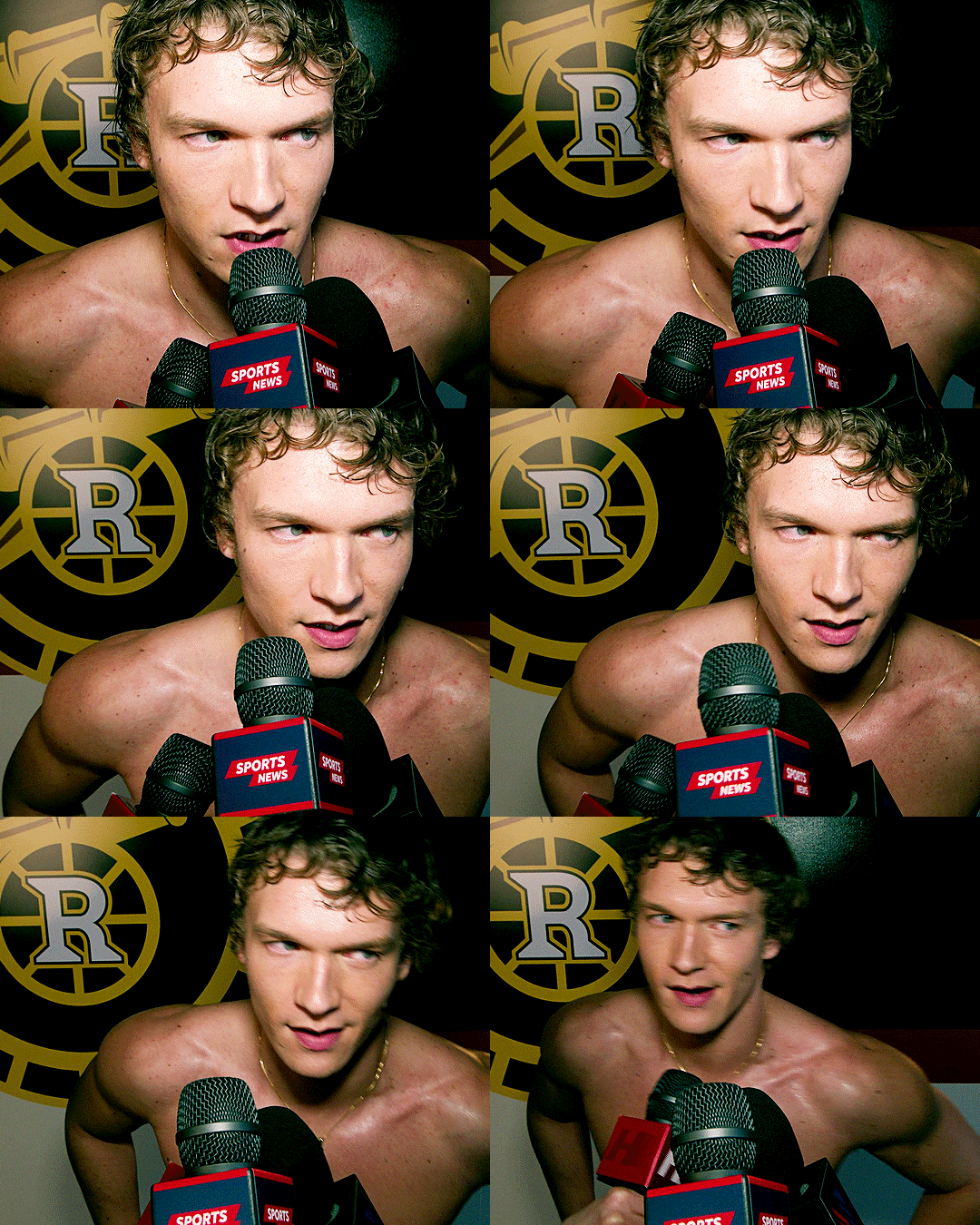
Image Description: Actor Connor Storrie as Ilya Rozanov in Heated Rivalry (Crave/HBO Max) is seen winking at journalists at a press conference.
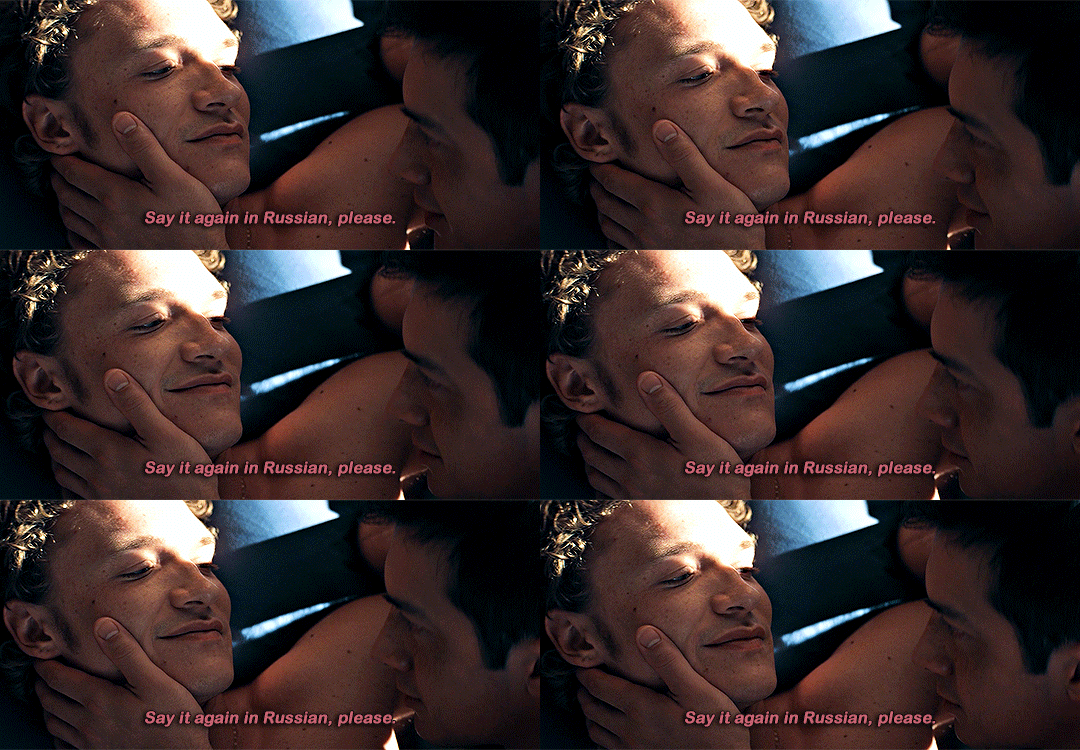
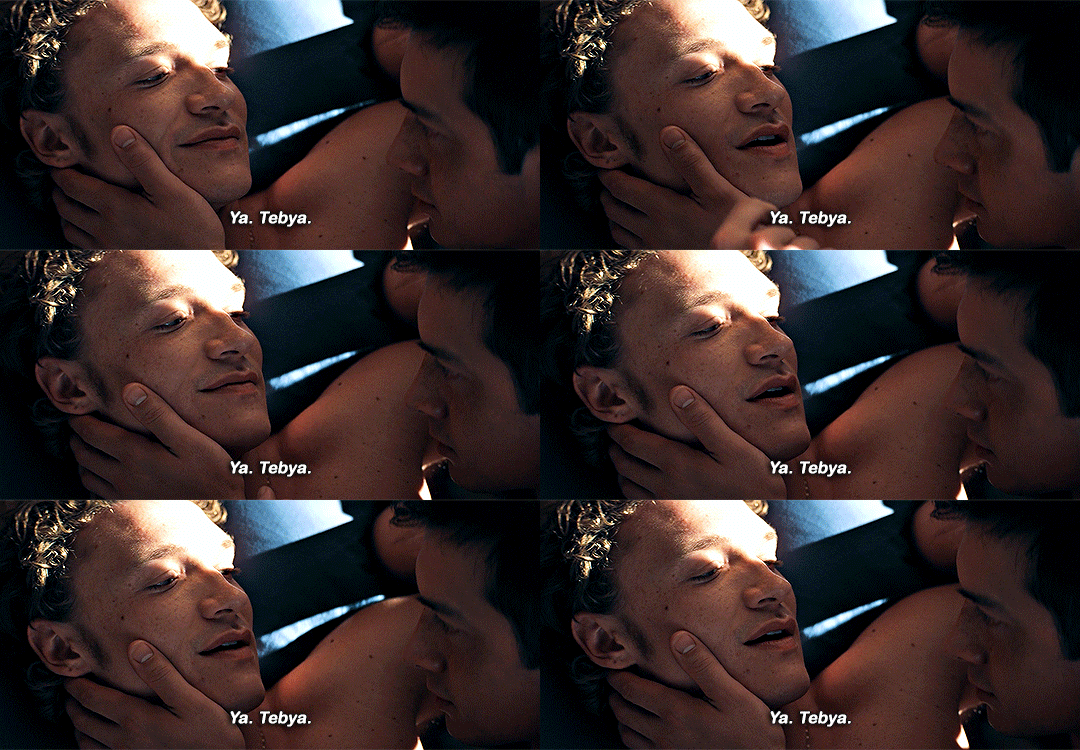
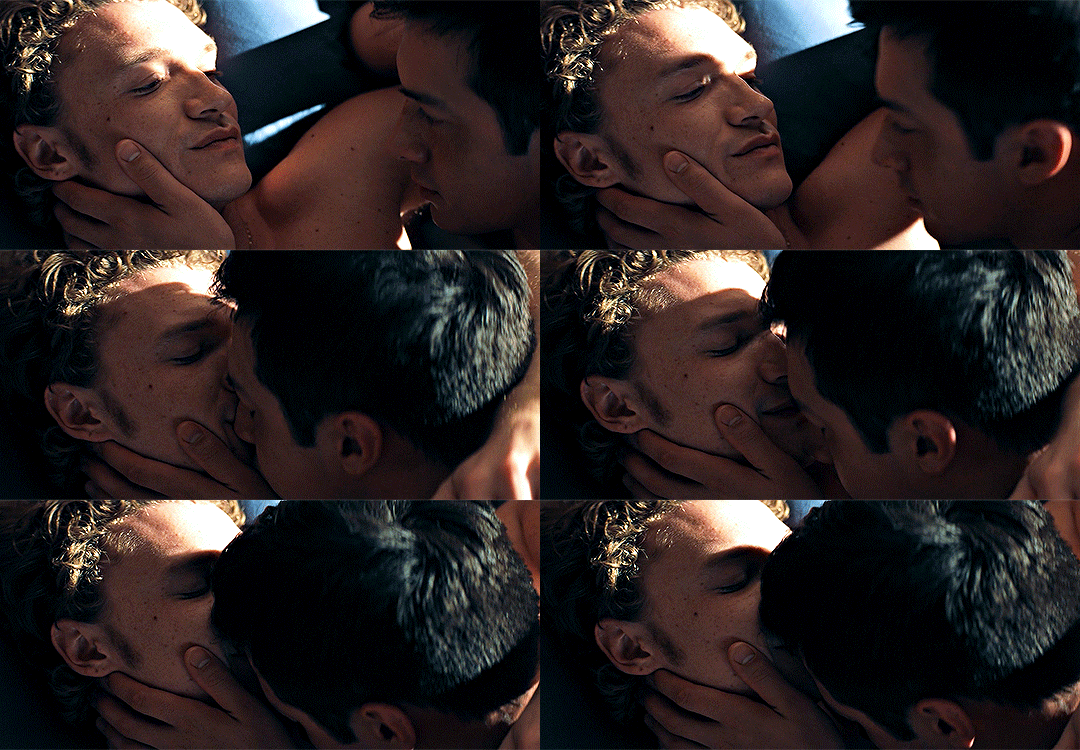
Over the Christmas break, I had learned about the breakout streaming hit of Winter 2025, the Canadian show Heated Rivalry. As I binge-watched the six episodes of its first season, it dawned on me that the queer joy and eroticism between the fictional closeted gay hockey players Ilya Rozanov (a Russian character played by Texan actor and filmmaker Connor Storrie) and Shane Hollander (a Canadian character played by Canadian actor and filmmaker Hudson Williams)—originally created by Canadian author Rachel Reid—embody everything I’ve been striving for in a romantic relationship (maybe minus the closeted part): emotional vulnerability, reciprocity, and commitment.
Whether it is through Storrie’s (as Ilya Rozanov) raw and authentic four-page monologue, performed in Russian, or Williams’s nuanced and deeply emotional performance (as Shane Hollander), sometimes conveyed in micro-expressions, there is a reason why the show became a global phenomenon and catapulted its relatively unknown stars into global stardom: people are craving realness and authenticity now more than ever. A testament to this can be verified in how the actors’ quick rise to fame happened in a mere two months, leading to them presenting the award for Best Supporting Female Actor at the 83rd Golden Globe Awards, as well as to Connor Storrie hosting an episode of the 51st season of Saturday Night Live—career-defining moments that usually take years (!!!), not mere months in a regular actor’s trajectory.
In a world where everything has become Instagrammable and easily disposable at the touch of a finger, even Hollywood has been suffering from an originality problem, in an ever-changing global panorama where celebrities and influencers try to stay relevant amongst rapid changes in international events. Not to mention that Netflix, as a global streaming platform, has introduced the controversial practice of simplifying scripts and requiring actors to repeat key plot information throughout shows and films in order to compensate for viewer distraction caused by “second-screen” viewing—that is, watching a series or film while simultaneously engaging with another screen, such as a smartphone or tablet. This “dumbing down” of artistic and creative endeavours because of technology has been largely discussed by entertainment industry veterans such as Matt Damon and Ben Affleck.
Perhaps in the famous and predictive quote commonly attributed to US American artist and filmmaker Andy Warhol about how "in the future, everyone will be world-famous for 15 minutes", there was already something ominous being conjured on how Celebrity and Influencer Culture would appear in the 21st century: if everyone becomes relevant, then what is the real meaning and purpose of art and artistic recognition in a world of ubiquity? In my opinion, Heated Rivalry answered this question by keeping the premise of its own creator, Canadian actor, director, screenwriter, and producer of film and television Jacob Tierney: not to compromise on his artistic vision for a larger viewership or even budget.
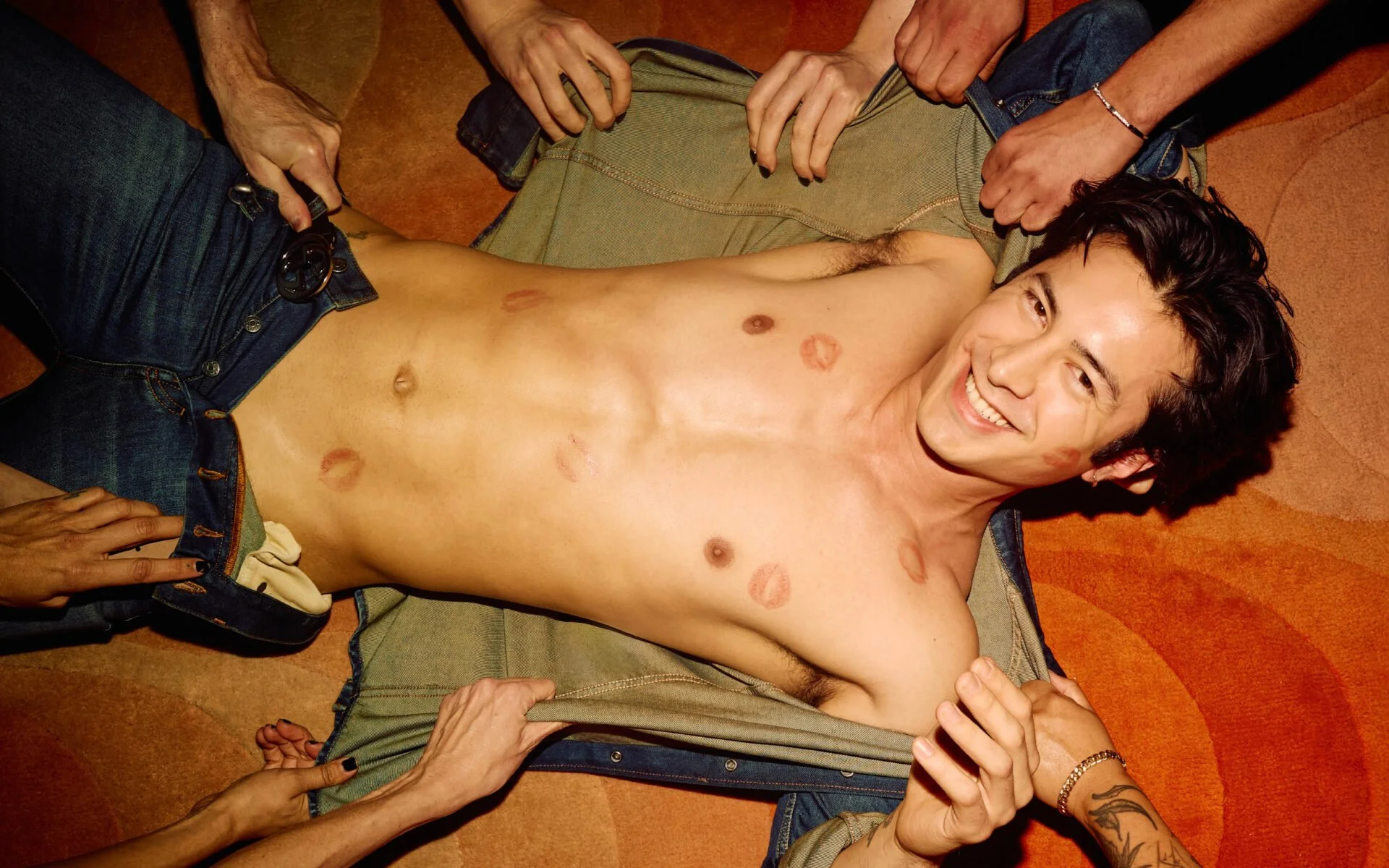
Image Description: Actor Hudson Williams is being man-grabbed in this picture from Wonderland Magazine.
I feel like I am too old for the teenage-like obsession that has led a global fandom towards Heated Rivalry’s enormous success, and yet I am unashamedly one of the millions of people engaging daily in internet forums about the series, its stars and all its shenanigans.
What interested me most in the relationship dynamics depicted in Heated Rivalry is how the pairing of Ilya Rozanov and Shane Hollander both confirms and subverts prevailing societal, cultural, and online discourses on queer relationships and depiction of sex, particularly those circulating on social media. These discourses often draw—explicitly or implicitly—on Attachment Theory, a psychological framework developed by British psychiatrist and psychoanalyst John Bowlby (1907-1990), expanded by American-Canadian developmental psychologist Mary Ainsworth (1913-1999), and popularised in recent years through the book Attached by US American psychiatrist and neuroscientist Dr. Amir Levine and psychologist Rachel Heller. The main concept of this psychodynamic theory is the idea that the way we bond with caregivers early in life shapes how we connect, trust, and feel safe in relationships later on—especially close ones like friendships and romantic relationships.
First of all, I think that this concept needs a real update in its intersectionality, not only in how it can be applied to same-sex couples and relationships, but also in the way that it can be made more sensitive and appropriate to intercultural romance. This is especially important, because attachment theory operates with a series of defined psychological categories for different types of attachment, yet these derive from a fixed—often heteronormative—psychological and familial background that shows little to no intersectional approach.
Sure, one could look at Ilya’s life and family history—his mother’s death by suicide related to mental health struggles, an abusive father, and a homophobic brother—and equate this background with what attachment theory would describe as an avoidant attachment style. In this framework, such individuals develop a profound fear of vulnerability and emotional intimacy, rooted in early trauma, which can lead them to self-sabotage romantic relationships due to both fear of engulfment and fear of rejection.
However, Ilya’s story arc in the show and his character development depict a clear choice to heal and grow into a partnership with Shane, despite the challenges posed by their successful careers in a field that has historically been unkind to gay and queer players. In contrast, Shane—described in Rachel Reid’s books as neurodivergent—could be seen as displaying characteristics of an anxious attachment style. Unlike Ilya, Shane does not have early childhood trauma; instead, he is shaped primarily by a controlling mother whose behavior resembles that of a helicopter parent.
Normally, this pairing of anxious-avoidant relationships is depicted in literature and media as that of incredible volatility and imbalance, but Ilya and Shane make it work despite their cultural backgrounds and childhood trauma (or lack thereof). In this sense, the way with which Jacob Tierney adapted Rachel Reid’s source material proves itself not by amping up the rivalry between the main characters, but by making it resonate: just a few days before I wrote this blog entry, US American ice hockey player Jesse Kortuem came out as gay citing the Canadian show as a major influence on his decision.
Thus, the revolutionary aspect of Heated Rivalry seems to be exactly in how it eroticises attunement, not imbalance, and in its portrayal of a healthy masculinity that is defined not by performative intimacy, emotional recklessness or cruelty, but by conflict and repair, tenderness and vulnerability. The transgression in this streaming series is seen and experienced not exclusively in how two men loving each other can be a point of tension within heteronormative and hegemonic narratives, but rather through its commonality. It is ordinary and extraordinary all at once.
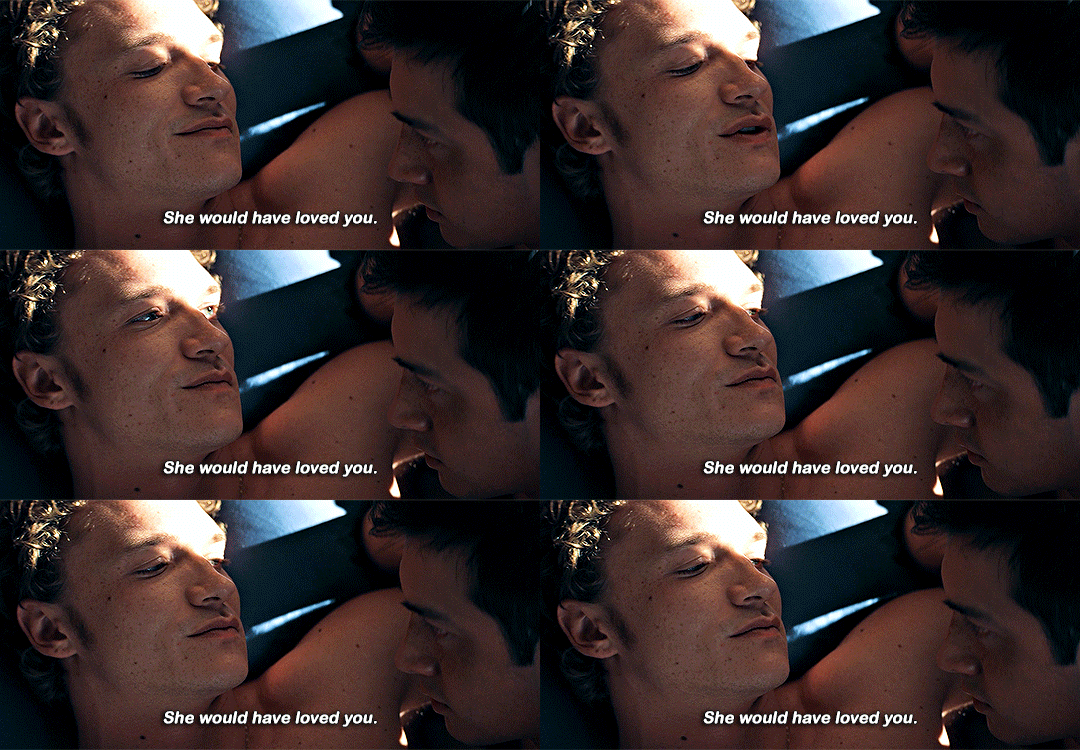
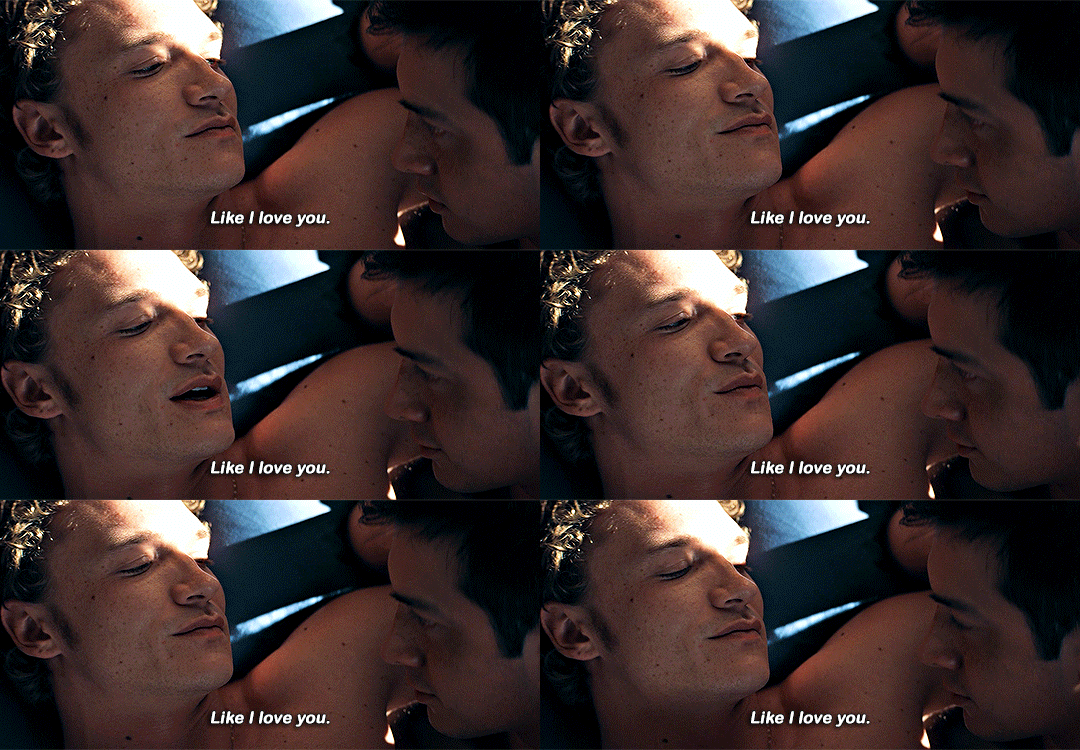

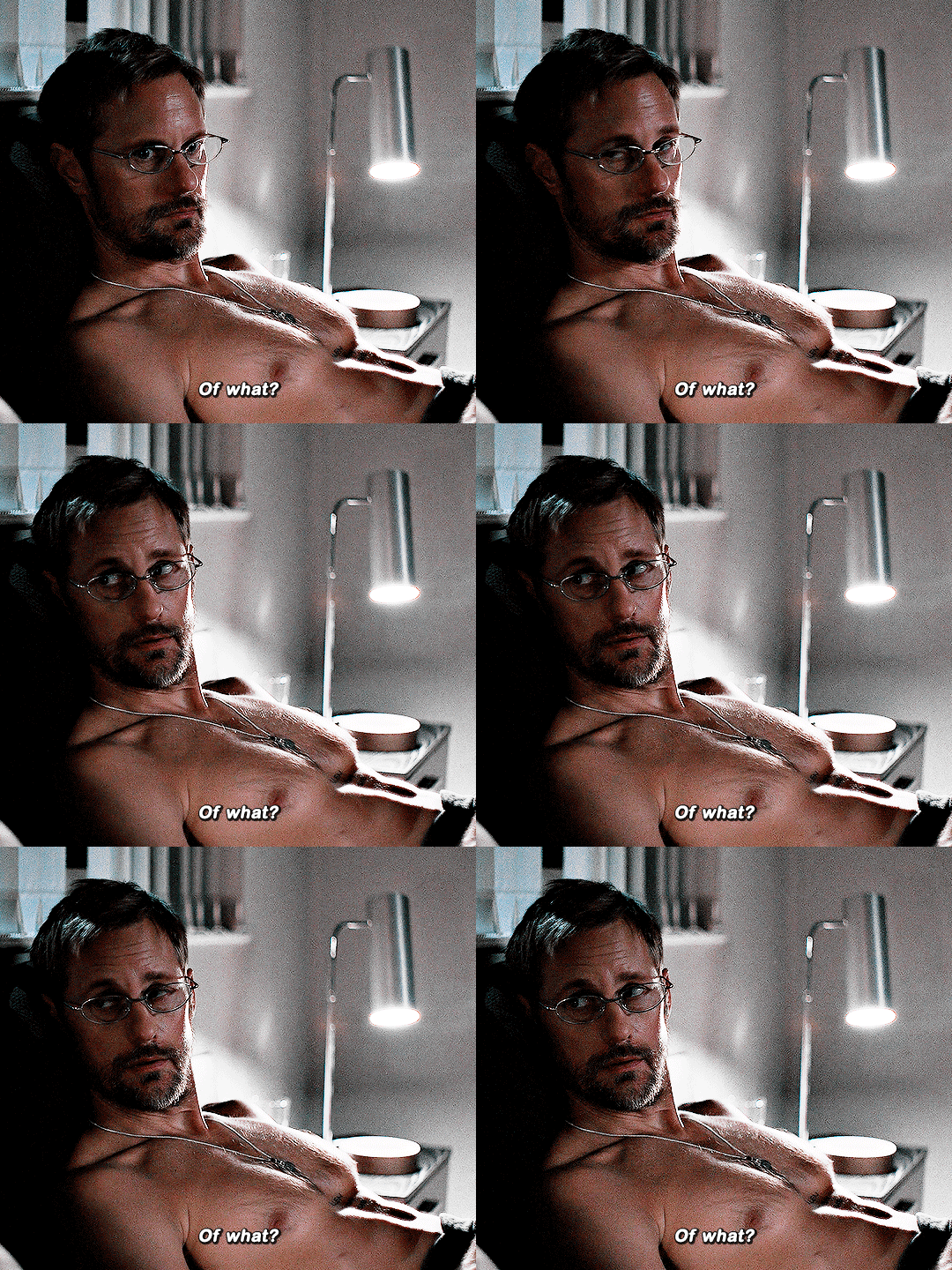
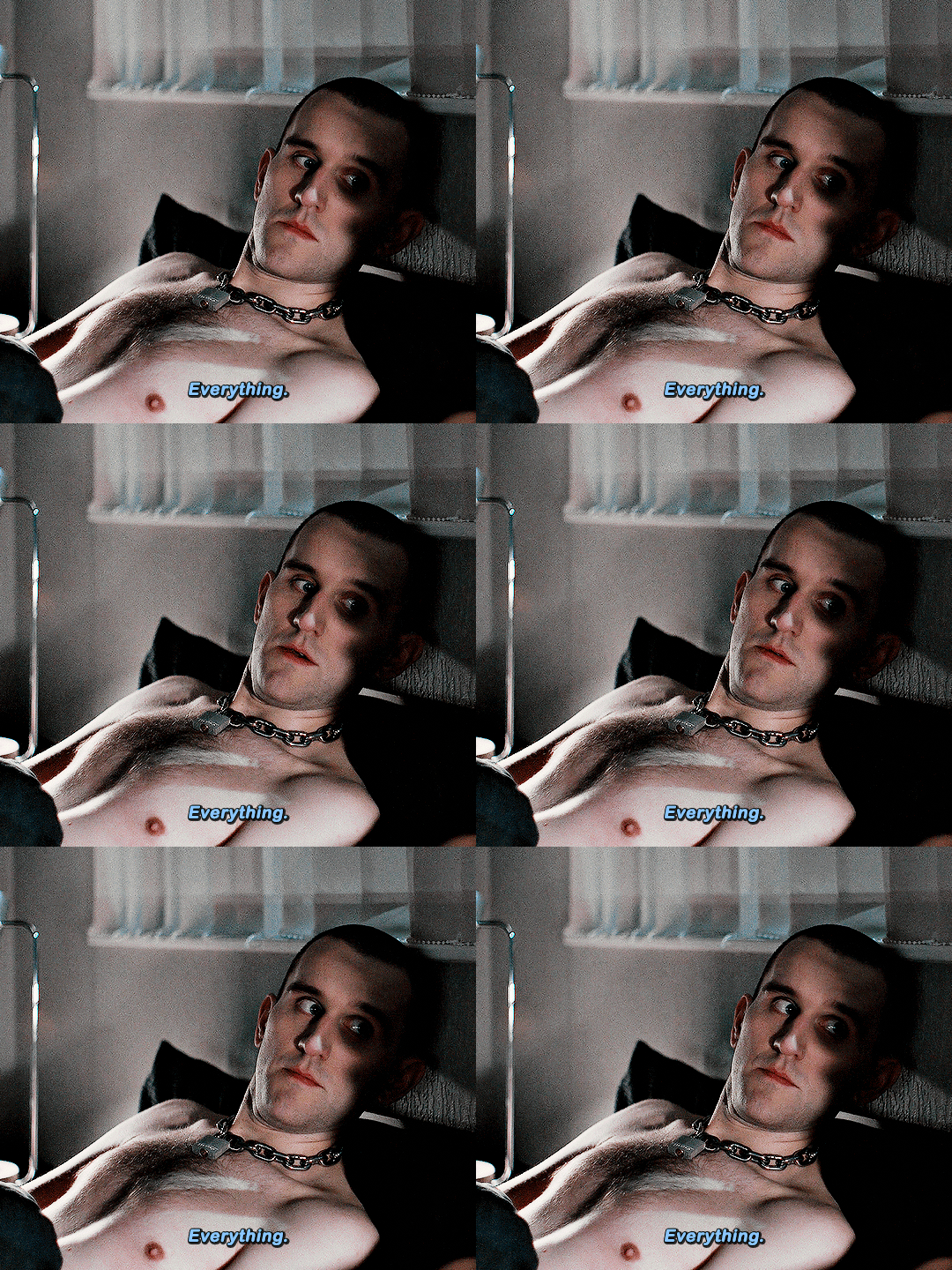
Just today I watched another masterpiece on queer love, the film Pillion created and directed by English film director and screenwriter Harry Lighton in his feature directorial debut, itself based on the 2020 novel Box Hill by Adam Mars-Jones, and starring brilliant performances by actors Harry Melling and Alexander Skarsgård. Maybe different from Heated Rivalry’s closeted and budding premise, but still psychological in its portrayal of BDSM and homoeroticism, the interactions between its two central characters—Colin (Melling) and Ray (Skarsgård)—mirror aspects of Ilya Rozanov’s and Shane Hollander’s experience of togetherness. The look on Ray’s face after he kisses Colin [spoiler alert!]—kudos to Skarsgård for his subtle, artful performance—near the film’s end reveals the impossibility of true vulnerability between them. As they break the rigid submissive-dominant dynamic in a romantic, emotional park kiss, the moment feels almost too expansive for Ray’s tightly controlled intimacy.
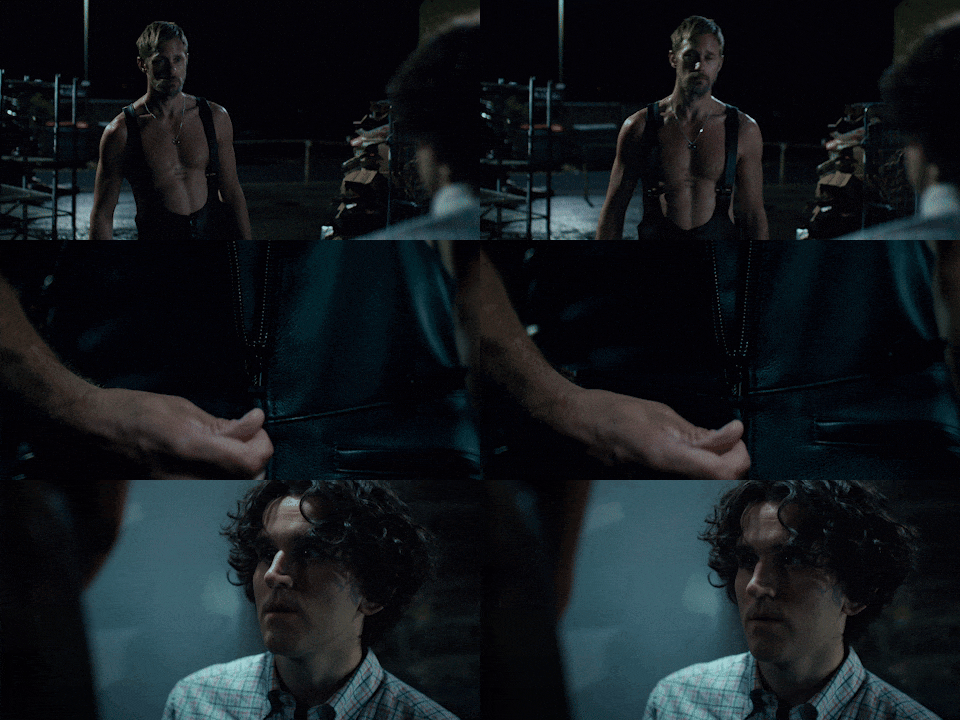
Image Description: Alexander Skarsgård as Ray in Pillion is seen walking towards a kneeled-down Harry Lighton as Colin, whilst the audience catches a glimpse of Ray unzipping the intimate area of his leather outfit.
Before I go on further, I need to make a little digression. I have myself not used dating apps in a very long time, because I feel they are the breeding ground for especially avoidantly attached men who are not willing to/have not tried to work on themselves. In cities like Berlin, especially, the promise of instant gratification, validation and numbing provided by dating apps has particularly become unattractive, in my experience.
Just to be clear: I am by no means making any broad generalisations. I do know there are emotionally mature and available people who are grounded and willing to co-create in dating apps, but I just haven’t been able to find any of them through that channel. Nevertheless, I encourage anybody to experience connection and relationships through whatever means they choose.
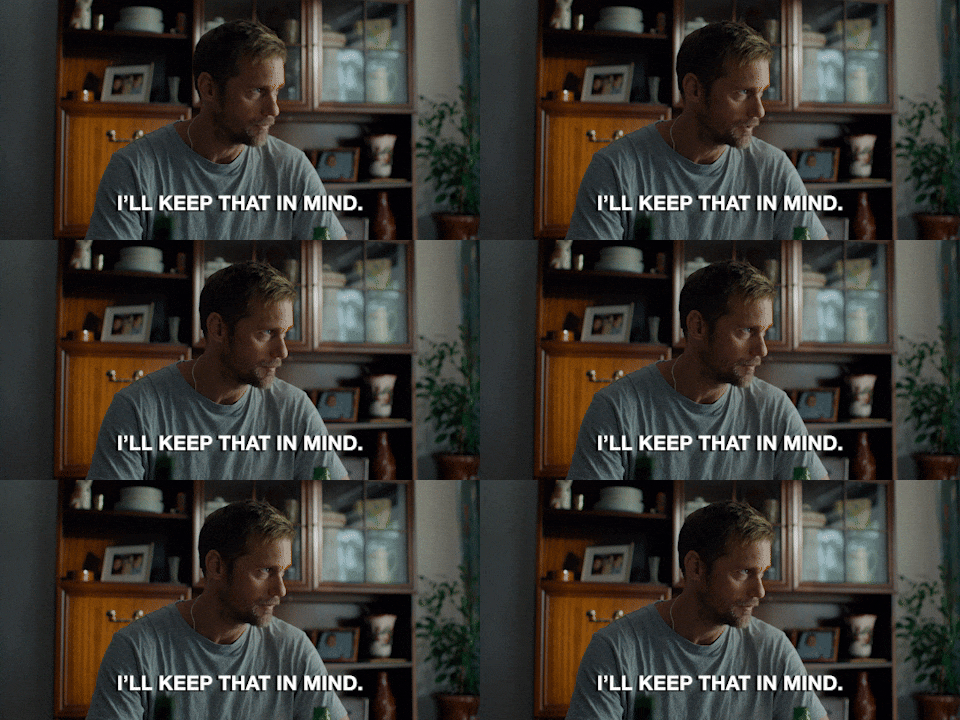
Image Description: Alexander Skarsgård as Ray in Pillion is seen sitting down at the living room of a house. The words “I’ll keep that in mind“ are captioned at the bottom of the picture.
Anyhow, back to Pillion, I could recognise so much of my exes in the archetypes played out by both Colin (the anxiously attached polarity) and Ray (the avoidantly attached counterpart), that the movie itself felt healing in a different way from Heated Rivalry. As I watched Pillion, I didn’t sob—like I did during multiple episodes of Heated Rivalry—maybe because the latter touched aspects of intimacy and romance that I aspire to experiencing myself, and the former just gave me validation for understanding why I seemed to have attracted so many avoidantly attached people in the past.
Whereas in most contemporary psychological literature, the pairing in anxious-avoidant relationships would be rendered as “toxic”, I’d like to challenge this notion into an opportunity for growth and sovereignty. I personally do not appreciate the classification of “toxic relationships”. Much like terms such as “narcissistic”, “consent”, or “gaslighting”, it has become an overused and often incorrectly deployed label that many people apply at the first sign of disagreement or relational conflict—without properly investigating or acknowledging the deeper dynamics of a relationship, which go beyond the mumbo-jumbo spread by some self-help creators on short Instagram and TikTok videos.
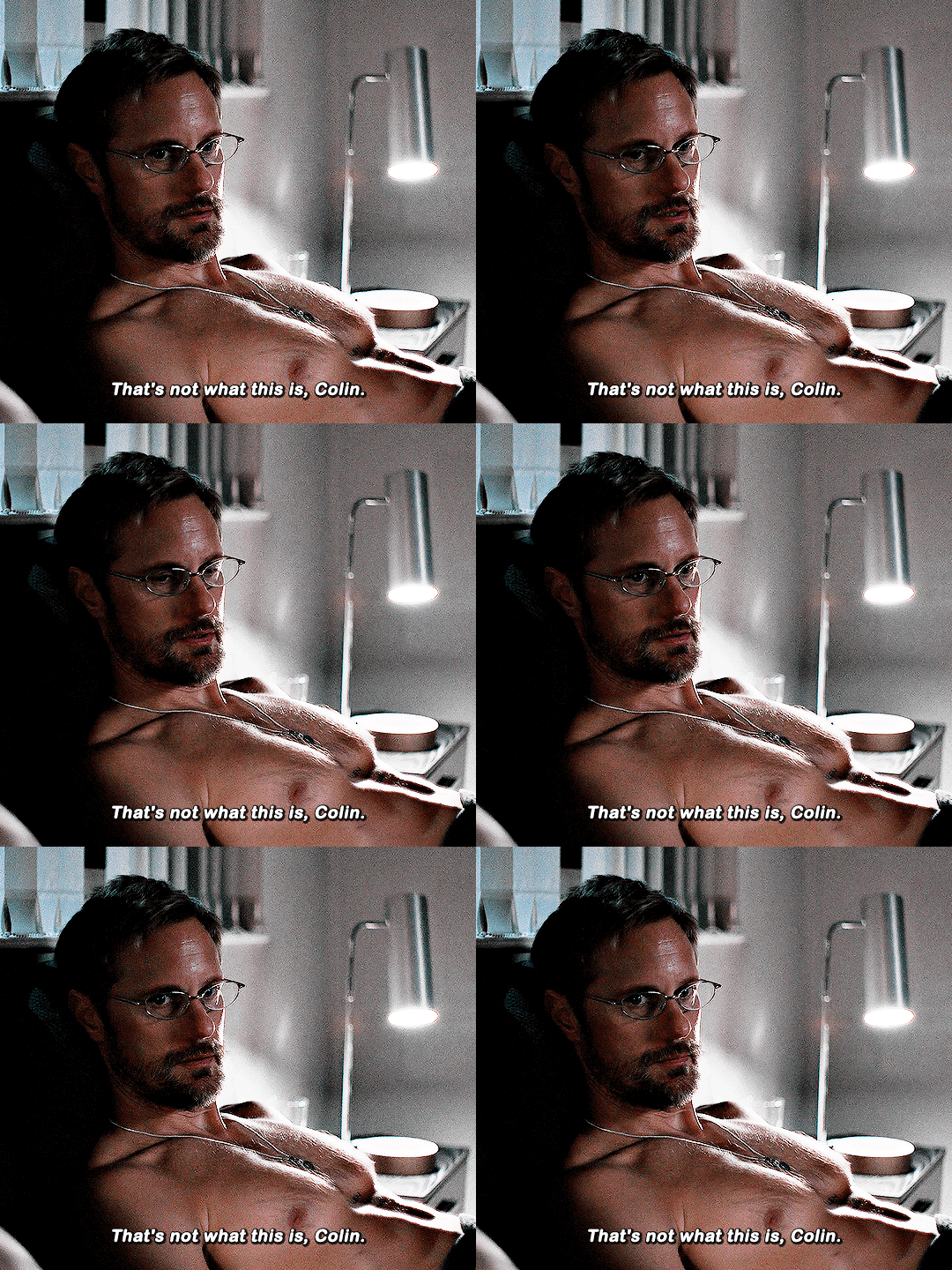
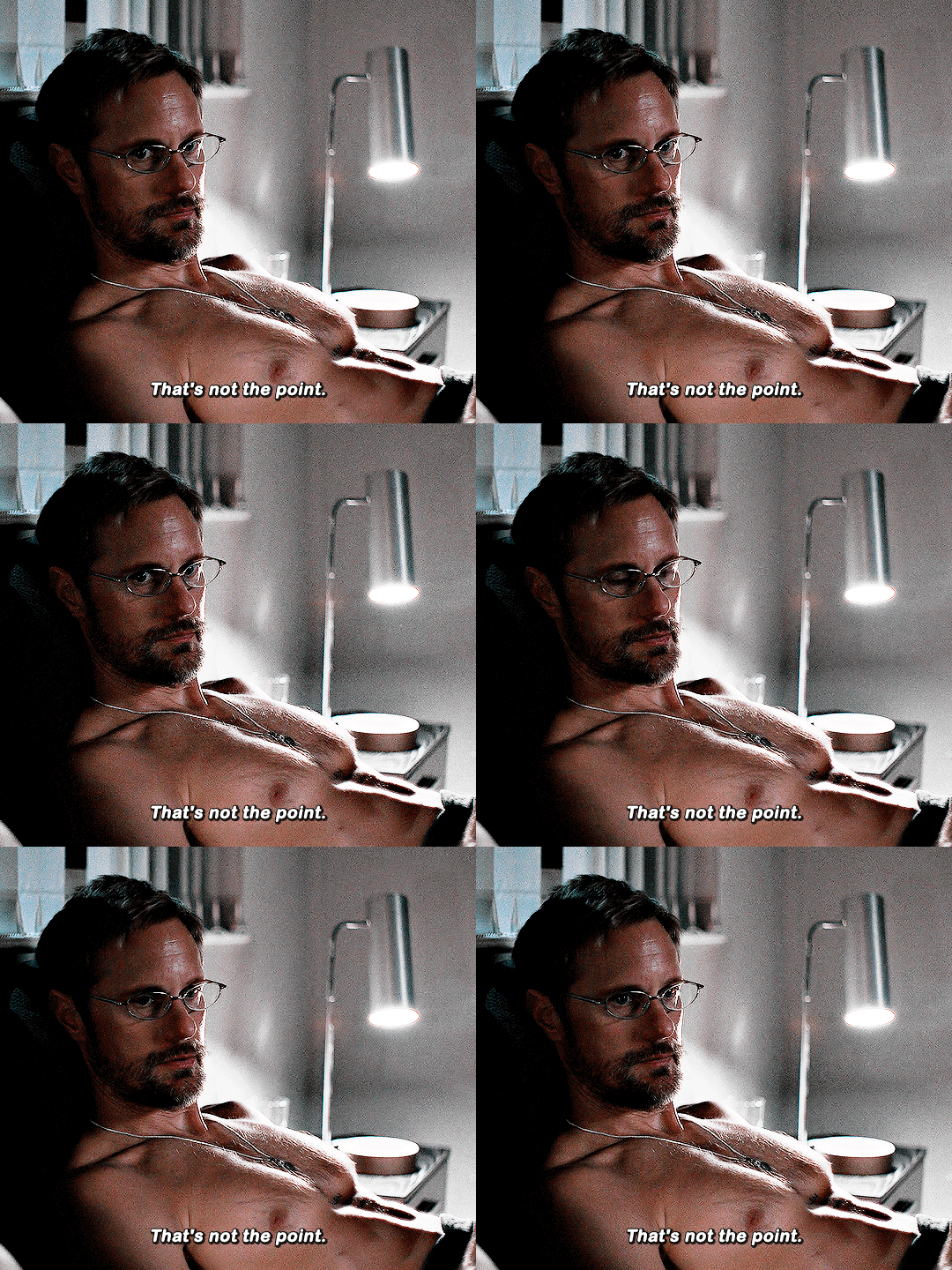
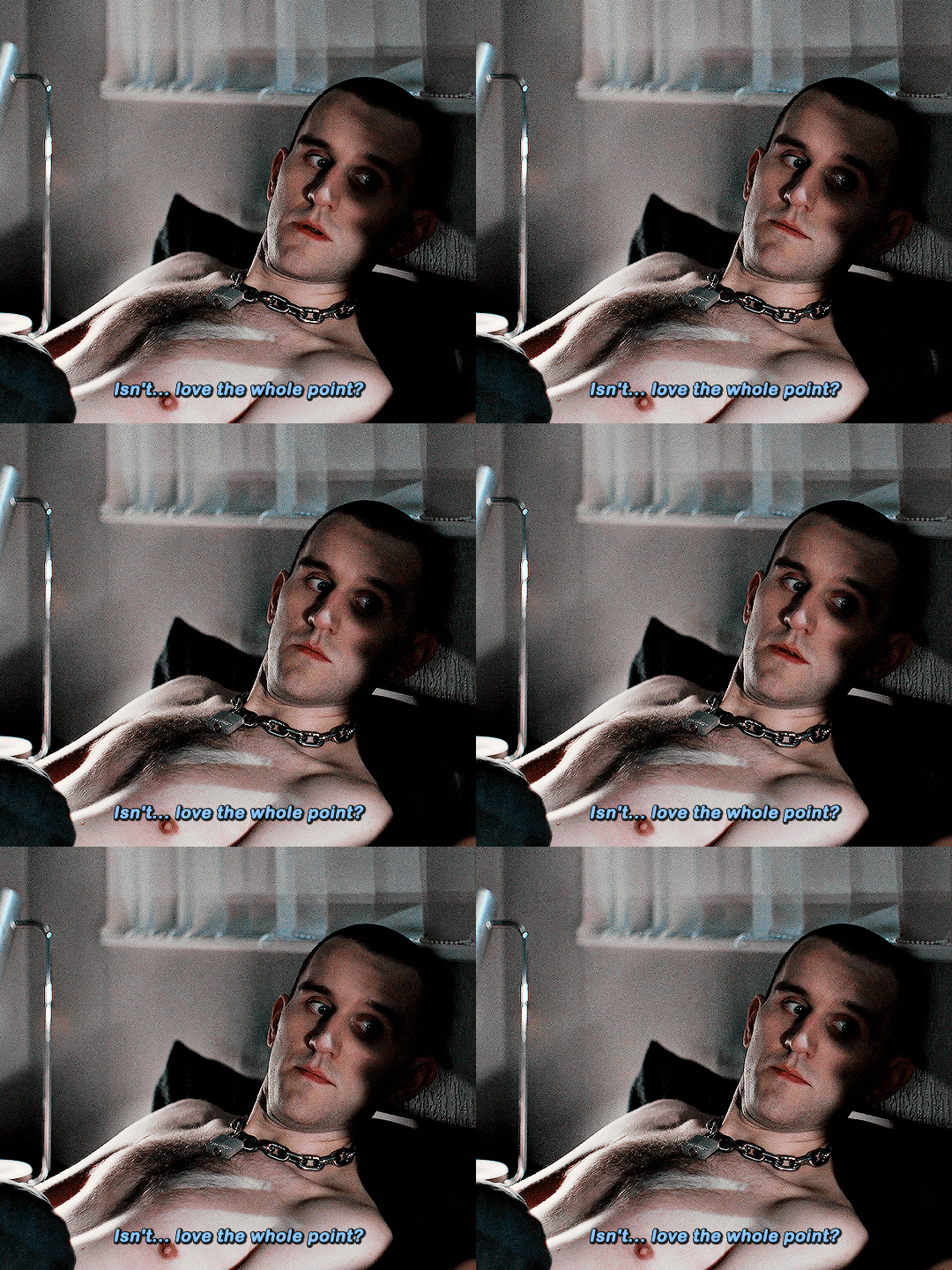
The reality is that love is a lot more complex and intricate than the textbook mentality that is starting to contaminate everyday social life from its non-consensual intercourse with social media (no pun intended). Don’t get me wrong, I think everybody should try psychotherapy at least once in their life, and I even advocate for it to be secured under universal health care, but I do not, in any way, shape, or form, support the psychobabble that social media helps promote, especially the non-scientific “illnesses” and “addictions” that have been created by self-help industry professionals claiming to be cognisant of neurobiology—I have already had so many passionate exchanges with friends about the religious origins of the so-called phenomenon of porn “addiction” (hint: it is not recognised by any scientific journal or board in the world). But that’s a topic for another blog post….
Watching Ray’s expression as he realizes the depth and vulnerability of his love for Colin during their park kiss, I saw the same flicker of fear that many of my exes showed when they thought of being with me felt like a “point of no return.” Both Ray and some of my exes fit the archetype of the avoidantly attached—people whose immediate response to emotional vulnerability and real intimacy is to engage in what attachment theory calls deactivation strategies. [Spoiler alert!] Ray enacts this by leaving Colin without warning. As in fiction mirroring reality, the pain of abandonment ultimately fostered growth—for Colin, and for me—by attracting healthier, more grounded relationships. Once an anxiously attached or codependent person heals, the people drawn into their life begin to reflect mutuality and emotional availability, no longer repeating patterns of scarcity from the past.
The difficulty of living a healthy queer romance often comes from realizing there’s no ready-made script to follow, no cultural blueprint to model ourselves on. That’s why therapy, spiritual practice, or community-based healing can be so transformative—they help us untangle the patterns of attachment trauma and question the narrow definitions of love and intimacy handed down by media, literature, and culture. In doing so, we start to glimpse what queer love can truly feel like, on its own terms, untethered from expectation.

Image Description: Ilya Rozanov (Connor Storrie) and Shane Hollander (Hudson Williams) are seen in one of the scenes from Heated Rivalry, embracing each other in a hug.